
How the Esports World Cup Partnership Program helps organizations excel in new games and increase viewership
In early May, 30 esports clubs worldwide joined the Esports World Cup Foundation program to provide financial backing for teams gearing up for the upcoming world championship in Riyadh. This initiative spurred organizations to explore new games and bolster their rosters. Esports Charts has highlighted the distinctive features of this program and its widespread impact on the industry.
The structure of the esports ecosystem allows each club to independently pursue sponsors and investments, shaping their direction and focus based on financial resources. However, clubs often encounter limitations in resources, necessitating careful consideration when adding new players or forming rosters. Yet, the Esports World Cup Foundation's support streamlines this process, empowering clubs to explore new avenues and disciplines.
Also Read: Road to Esports World Cup 2024 — all teams, tournaments and qualifiers
While the exact funding allocated to Esports World Cup Foundation program participants remains undisclosed, representatives have mentioned that some organizations may receive substantial annual support, potentially reaching six figures. Clubs are expected to allocate these funds towards enhancing infrastructure, expanding rosters in new games, and generating content.
Despite receiving 150 applications, only 30 clubs secured official partnership status with EWC, underscoring the competitive nature of the selection process.


Following the announcement of the Esports World Cup Foundation partner clubs, these organizations swiftly embarked on forming new teams and revisiting games they had previously abandoned.
Among the Esports World Cup Foundation participants, one of the most popular new directions has been Mobile Legends: Bang Bang. Once overlooked outside of Southeast Asia, Mobile Legends has now risen to prominence as one of the most popular mobile titles. Regional MPLs are attracting substantial viewership hours and millions of viewers on broadcasts. Nevertheless, this discipline is still viewed as relatively exotic for top American and European clubs.
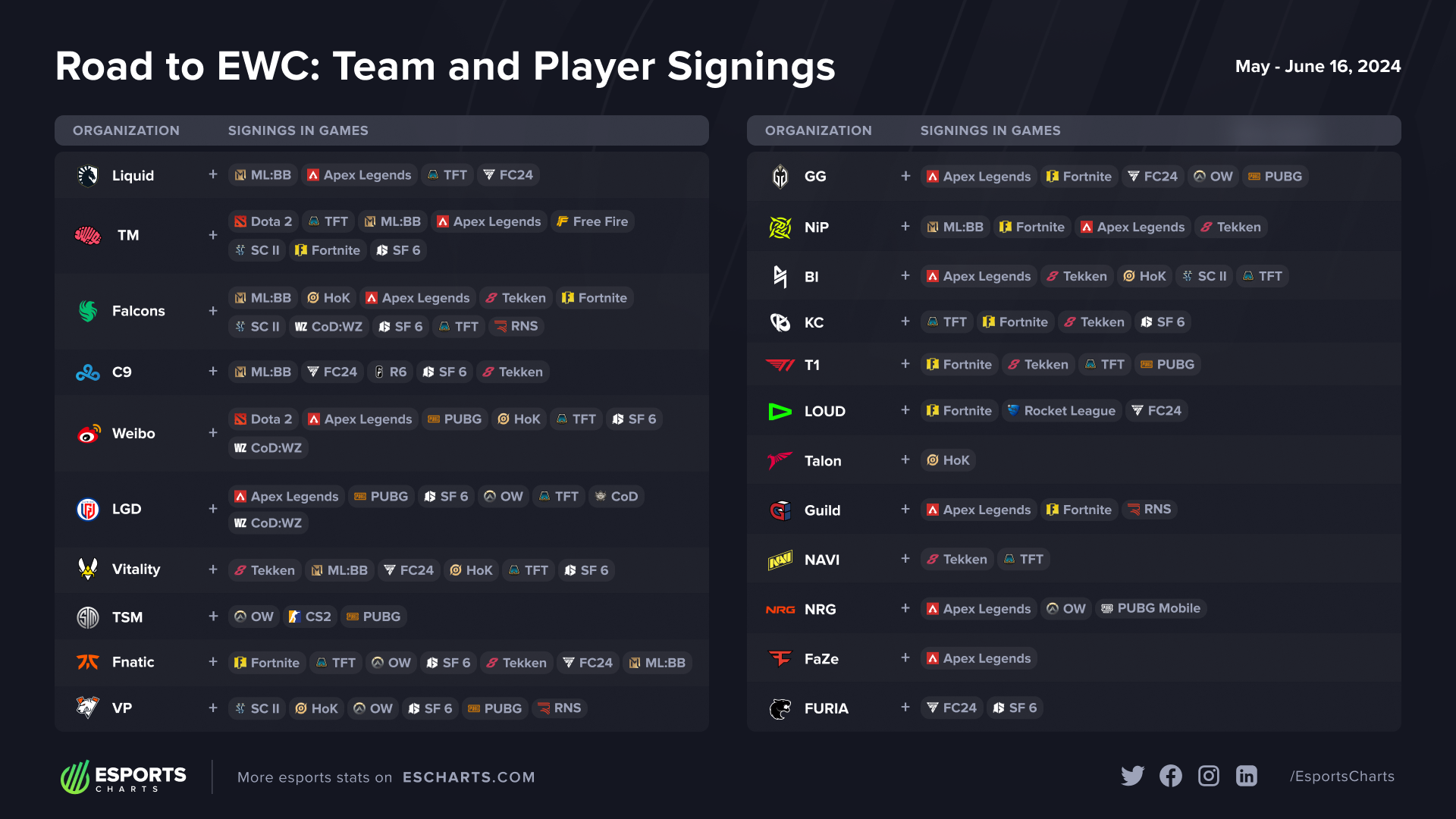
Thanks to the support of the Esports World Cup Foundation, teams like Team Vitality, Fnatic, Team Falcons, and Team Liquid have decided to sign rosters for Mobile Legends. Notably, Team Liquid surprised the community by acquiring four rosters, including Indonesian team AURA Esports, Philippine team ECHO, and their academy rosters in MDL. Fnatic forged a partnership with ONIC Esports, a team boasting Mobile Legends rosters in Indonesia and the Philippines, now competing under the Fnatic ONIC banner. Similarly, Team Falcons partnered with the Philippine organization AP.Bren and acquired the women's team GPX Basreng. Additionally, Team Vitality made an entry into women's esports by signing the Bigetron Esports roster.
However, the signing of Mobile Legends rosters is just one example of the broader trend. Following the Esports World Cup Foundation announcement, several other partner clubs have ventured into new disciplines. For instance, Natus Vincere signed its first-ever Tekken player, while Virtus.pro returned to StarCraft II after a decade-long hiatus. Multiple organizations strengthened their Fortnite and Apex Legends rosters — two of the most popular directions after Mobile Legends. Some clubs also recruited players for Teamfight Tactics and fighting games.
The most notable roster changes took place in Twisted Minds, Team Falcons, and Weibo. For TM and Falcons, the Esports World Cup series represents "home turf," explaining their heightened activity. As for Weibo, the Chinese club not only signed rosters for Apex Legends and PUBG: Battlegrounds but also ventured into Dota 2 by collaborating with the Chinese team Xtreme Gaming.
Collaborations between Western clubs and Asian teams are no longer a novelty in esports, yet they remain relatively uncommon. Nonetheless, they offer significant advantages for both sides: clubs gain access to new games and the chance to connect with local fanbases, while players, coaches, and managers gain valuable experience by partnering with prominent international organizations. Essentially, these collaborations facilitate a mutual exchange of cultures, experiences, opportunities, and networks.
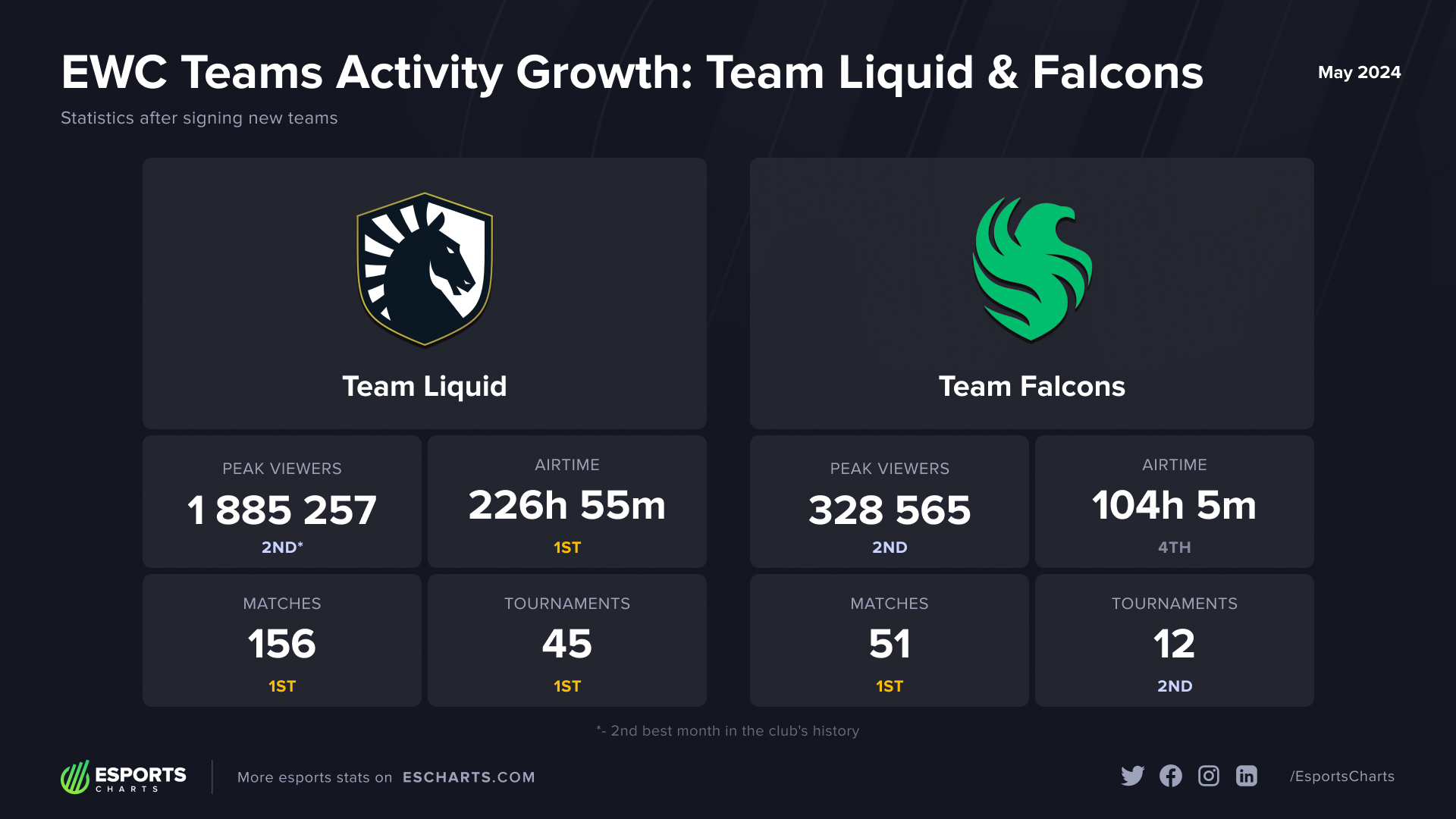
The addition of new rosters has already impacted the viewership metrics of clubs. For instance, Team Liquid achieved its second-highest monthly viewership in May, largely attributed to their Mobile Legends rosters. Their only surpassing this was in 2019 when their Dota 2 team won The International. Fnatic also neared a new viewership record thanks to their Mobile Legends roster — a particularly successful month that marked the second-highest total viewership in their history. Meanwhile, Team Falcons achieved two personal bests after introducing new rosters, enhancing their number of matches and total airtime in May.
The primary motivation for clubs to acquire new rosters stems from the announcement of the inaugural club championship in Riyadh in 2024. As part of the Esports World Cup, 20 separate tournaments will be held, encompassing the most popular esports disciplines. Clubs accrue ranking points for tournament victories (and even top 8 finishes). Consequently, the top 16 clubs in this ranking will share an additional prize pool of $20 million. In essence, each new roster presents an additional opportunity to accumulate ranking points in Esports World Cup tournaments. This often incentivizes clubs to sign players in disciplines with potentially smaller audiences.
The Esports World Cup 2024 tournament series is scheduled to take place in Riyadh throughout July and August, boasting a total prize pool of approximately $30 million. The largest portion of this sum will be allocated to Dota 2 tournaments, amounting to $5 million.

Подробные киберспортивные данные у вас под рукой.
Подпишитесь на и начните изучать!


