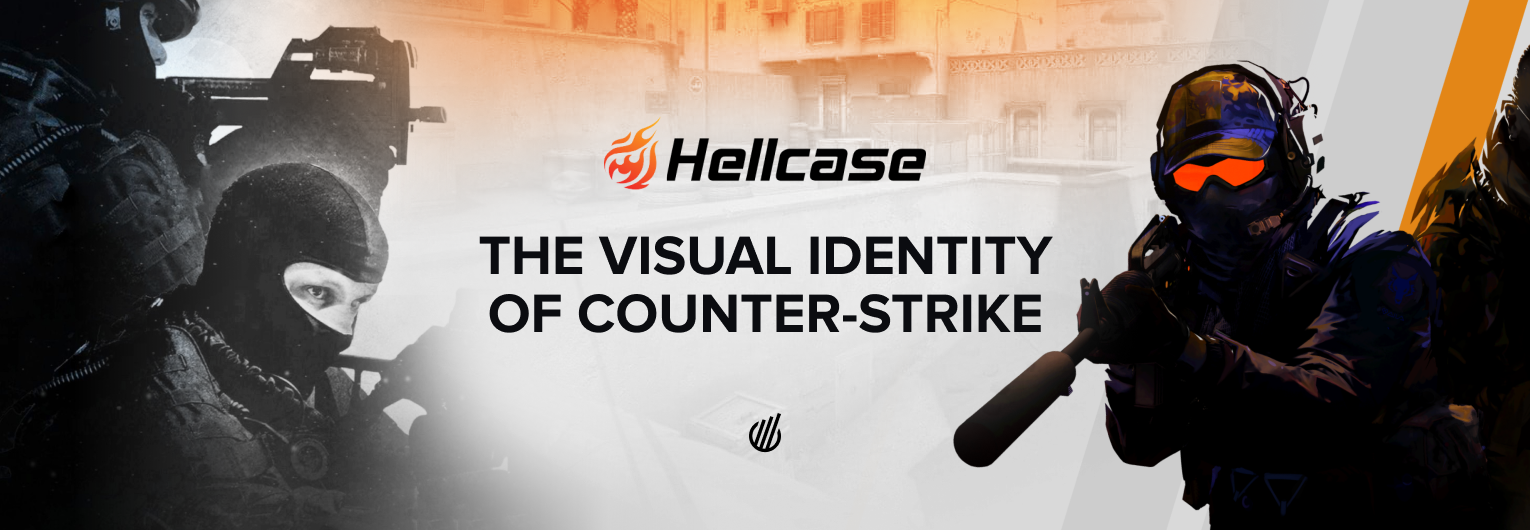

Counter-Strike’s visual identity journey: dark, realistic tactical shooter to vibrant, bright CS2
Counter-Strike boasts one of esports’ most impressive legacies, dating back decades to the roots of the industry. Over the years, the franchise’s visual identity has shifted, sometimes drastically, either between games or as a result of a game update. From the colourful Counter-Strike 1.6 beginnings to the vibrant CS2 present, Esports Charts takes a look at the journey of Counter-Strike’s visual identity.
The original Counter-Strike release featured vibrant, albeit crude, graphics which resonate nostalgically with many FPS fans. However, when Valve released Counter-Strike: Source in 2004, they used their new physics-driven Source engine to make a more realistic-looking title. Colors were toned down, the sky got a bit grayer, and this all contributed to the new grounded feeling of the title.
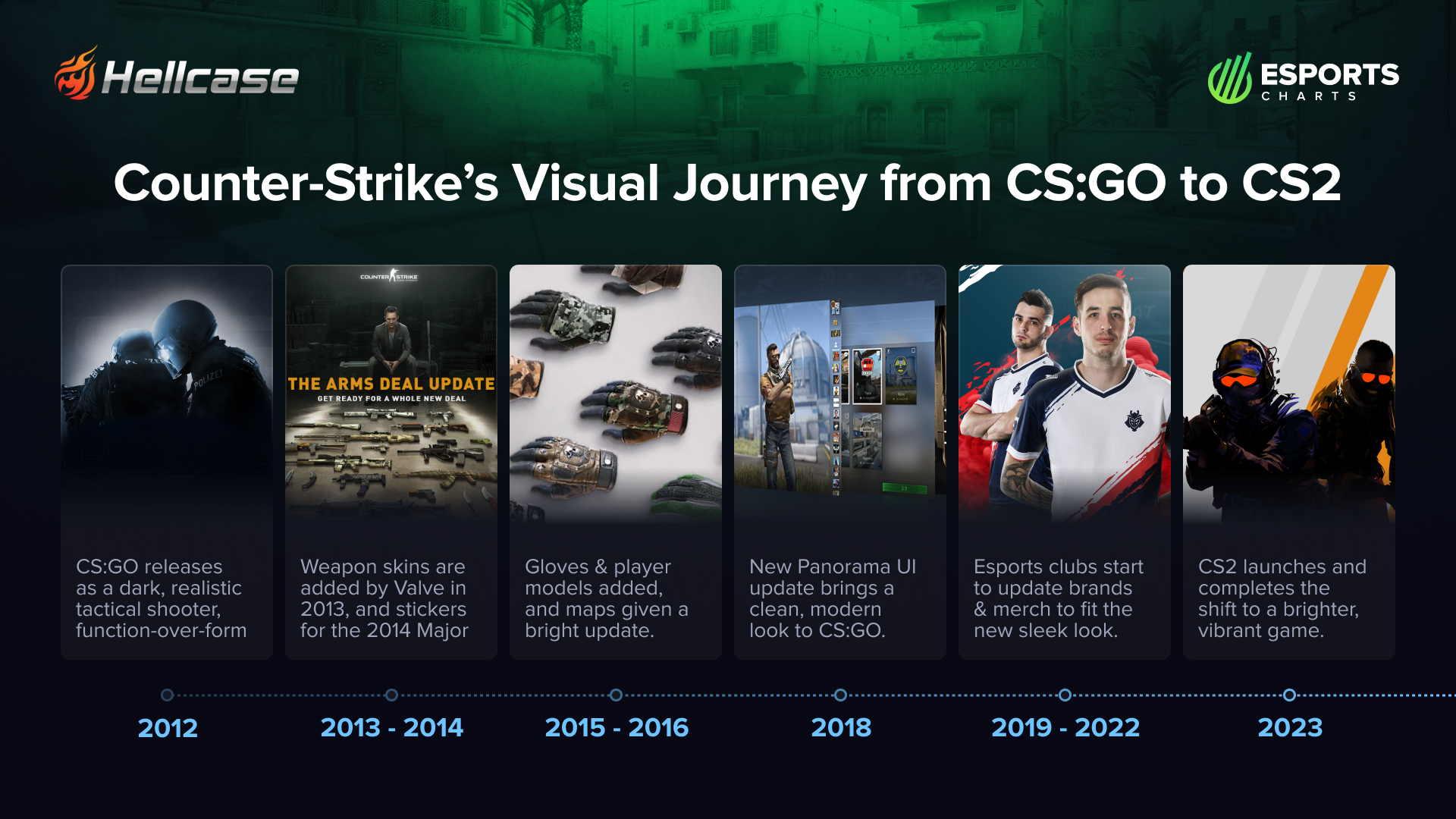
Throughout the lifecycle of Global Offensive, various updates drastically altered Counter-Strike’s visual style, which would eventually contribute to the return to vibrancy for CS2. Counter-Strike 2 would embrace this bright style, distancing itself immediately from its realistic roots. To understand how, and why, Counter-Strike’s visual identity shifted over the years, we have to go back to the beginnings of CS:GO.
Early CS:GO’s dark, realistic visual style and journey to a new look
When Counter-Strike: Global Offensive was released on August 21, 2012, it was not a game built for aesthetic pageantry. Developed on the Source engine, its visual presentation was a direct descendant of its predecessors, prioritizing raw performance and gameplay clarity. On top of this, the series had settled on a darker, more realistic style for the franchise. The user interface was functional but generic, offering a simple menu obviously influenced by popular shooters like Call of Duty.

This philosophy of function-over-form extended directly to the in-game experience. Player models were strictly locked to their respective factions, in contrast to Counter-Strike: Source, where players could pick from an assortment of models. In 2013, as Valve continued to develop and work on CS:GO, they began to bring updates that would change Counter-Strike’s identity forever.
The first significant shift in this rigid visual landscape arrived in August 2013 with the "Arms Deal" update. This landmark patch introduced the concept of weapon skins, allowing players for the first time to trade weapons, open cases, and show off to their friends. This was followed by the introduction of weapon stickers in February 2014, which could be applied to these new skins.
These updates were revolutionary, laying the groundwork for the sprawling in-game economy that defines Counter-Strike to this day. They provided players with the first real tools for personalization of their in-game character. While initially few understood the size this microtransaction system would grow to, it would become a lucrative driving force of the esports side of CS:GO.
Later in 2014, Valve built on their stickers idea by launching team and player autograph stickers for the esports scene. At the game’s second Major, ESM One Katowice 2014, stickers featuring logos of participating teams and autographs of pro players were released for the first time; a portion of these proceeds would be given directly to the respective team and player. According to data released by Valve in 2022, these esports stickers generated $70M for the professional scene in one year.
Clearly, the in-game cosmetics had quickly become a significant part of Counter-Strike’s identity. The game arguably started the still-ongoing video game craze of weapon skins and cosmetics as microtransactions, which has been the standard monetization method for many free-to-play titles over the last decade — plus some change. The skins and stickers became such a classic part of Counter-Strike, yet clashed with its dark, realistic foundation.
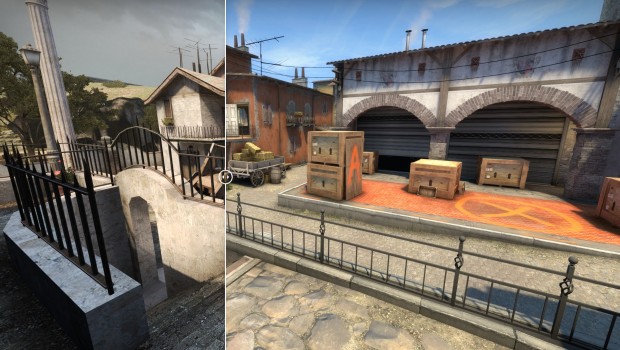
Over the years, Valve would bring various updates to directly change the visual identity of the game, bringing it more in-line with other popular titles of the era. CS:GO’s realistic visuals would slowly shift in the 2010s, as Valve began to update the maps themselves rather than the game’s visual style just yet. In 2014, Valve launched a revamped version of their map Train, which would kick-start a series of revamped maps (Nuke, Inferno, Dust II, etc.) with a new, bright style for the modern era of gaming.
Alongside these vibrant map updates, Valve also added glove skins in 2016, and later, player model skins, further deepening the customization and monetization options for the title. This also opened up a world of new mix-and-match possibilities, with many players matching their gloves with their knife, or favorite weapon such as their AWP skin.
While professional players messed around with gloves to their heart’s desire, they did make a gentlemen’s agreement to avoid using custom player models, based on the fact that some of the models may be harder to spot on certain maps. However, even players with their favorite combos might not be safe. Famously, North American player Russel "Twistzz" Van Dulken spotted a stack on B site by picking up on the colors of the enemies’ gloves.
As we mentioned earlier, multiple player skins were present in previous Counter-Strike titles, but Valve purposefully locked player models on the release of CS:GO. The release of custom player models for users to buy and trade marked a clear shift in priorities for the company; while the release philosophy of CS:GO was function-above-form, the later stages of the game shifted to bring it more in-line with other popular shooter titles both visually and in terms of customization options.
Valve clearly wished to modernize their title and give it that vibrant sheen that had taken over the mainstream gaming industry in the late 2010s. These changes all ultimately built up to the release of the Panorama UI update. Valve themselves described the overhaul as the “most substantial change to the look and feel of CS:GO since the game was released in 2012”, and this sentiment was echoed by many as a massive visual leap forward.
CS:GO’s Panorama update and the wider effect of the new visual style on the industry
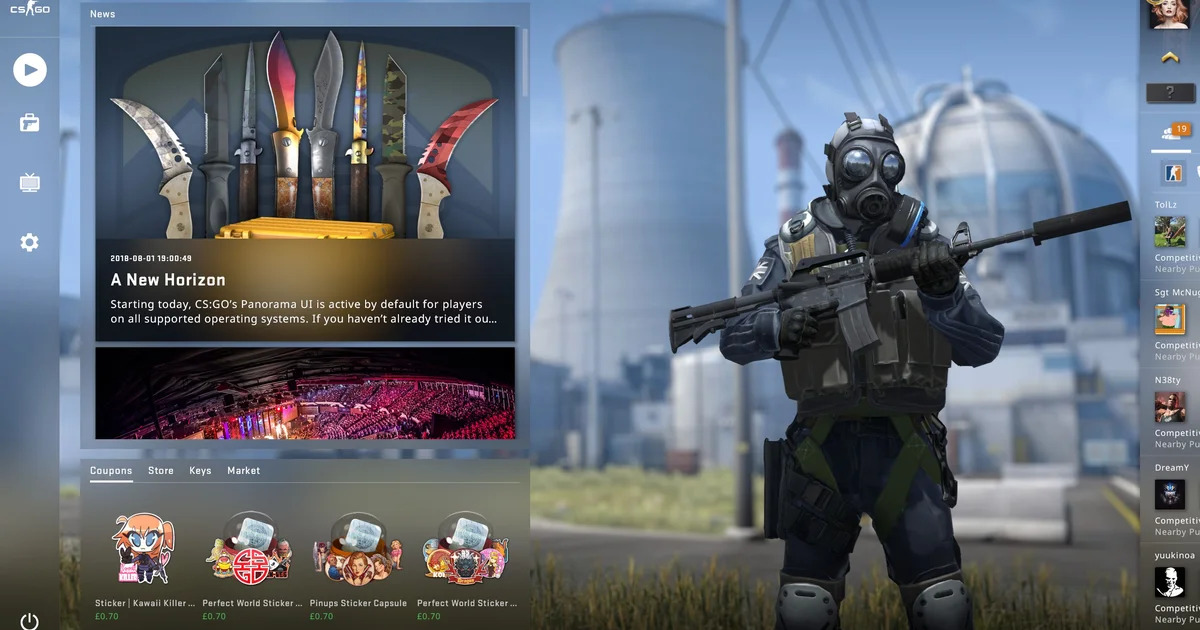
In 2018, Panorama replaced the dated, clunky UI with a modern, fluid, and visually rich interface — although, naturally, many fans still preferred the old UI for nostalgic reasons. The main menu, lobby screens, and even the in-game scoreboard were completely redesigned. The new UI was not just an improvement; it explicitly aligned CS:GO with the polished presentation of contemporary gaming giants, signaling Valve's intention to keep its game at the forefront of modern gaming, and not merely as a legacy title for a hardcore audience.
Valve’s modern view for Counter-Strike, whether intentionally or not, was followed by esports organizations across the industry. Branding decisions made by various esports organizations involved with Counter-Strike during this period show a clear evolution to this modern, cleaner visual design. Brands also began focusing on their design and identity more seriously, developing their own design voices for merchandise and jerseys. For example, MOUZ became known for their partnership with Vodafone and glitchy, dynamic designs on their apparel, a clear departure from their previous standard esports jersey.
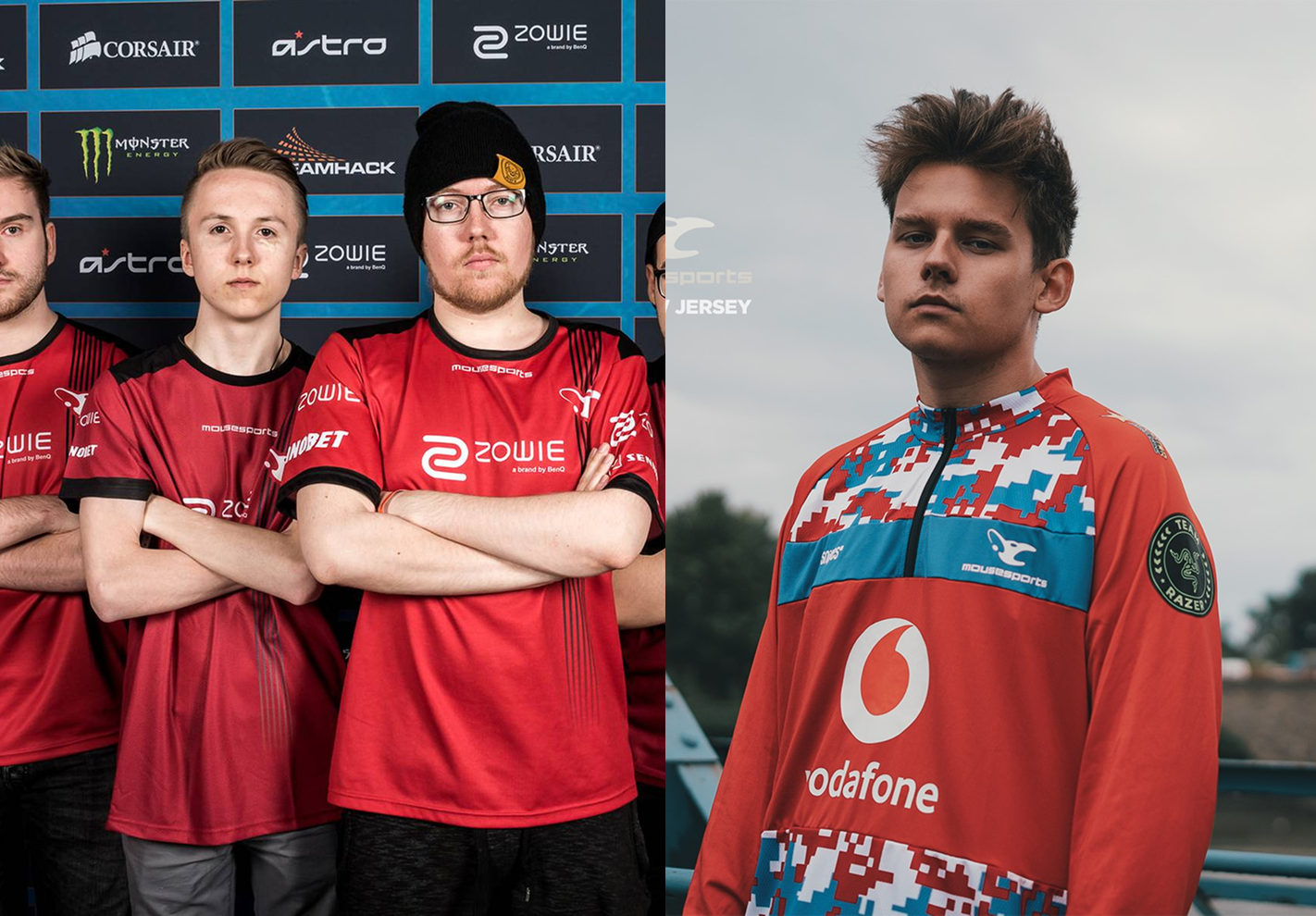
MOUZ also launched a rebrand in 2022, becoming the MOUZ we know today and moving away from their previous mousesports banner. Their previous mouse logo was also replaced with a more abstract, geometric image, falling in line with the shift towards cleaner, less busy logos.
This period is also when professional esports teams in Counter-Strike began to partner and work with fashion brands to elevate their apparel to the next level. G2 Esports moved quickly during this period to embrace the future of Counter-Strike; although the organization maintained their core samurai logo, 2018 marked the team experimenting with unique, colorful jerseys, such as the blue, red, and white French jersey sported by the team in 2018.
While legacy organizations were adapting to the new visual landscape, a new breed of team was being built for it from the ground up. No organization exemplifies this new school of esports branding better than Team Vitality. The French organization, founded in 2013, made a landmark move in January 2017 by announcing a partnership with global sportswear titan Adidas. This deal was immediately hailed as a game-changer for esports apparel, signaling a shift towards mainstream athletic partnerships.
The timing of Team Vitality’s entry into Counter-Strike was perfect. Team Vitality launched their CS:GO division just as the Panorama UI was becoming the default and they arrived on the scene with their Adidas partnership already in full swing. From day one, Team Vitality presented itself with a modern sports look. Their jerseys were not just fan t-shirts; they were designed and marketed as high-performance athletic wear, indistinguishable from the kits worn by athletes in traditional sports. This set a new benchmark for professionalism and aesthetic quality that other organizations would spend the next several years striving to emulate.
The rush to professionalize in the post-Panorama world was not without its missteps. In October 2018, hot on the heels of the update, Dignitas announced a sweeping overhaul. The organization had been acquired by the Philadelphia 76ers, and in 2018, rebranded their team entirely, coinciding with a partnership with sports apparel company Champion. CEO of Dignitias Michael Prindiville was quoted, “The esports ecosystem is changing rapidly. Evolving and broadening our name from ‘Team Dignitas’ to ‘Dignitas’ provides us the strategic breadth to best execute our competitive team business, but also pursue new verticals in the gaming world.”

The rebranding from Dignitas was poorly received by fans, with many missing the iconic Alien logo, which had become the mascot of the organization. In an attempt to update their organization, Dignitas instead faced community backlash over the change, and eventually, returned to a modernized version of the Alien logo in 2021.
Dignitas correctly identified the shifting landscape moving towards a more traditional sports aesthetic, and their initial 2018 rebrand had its logic. However, in joining in on this industry trend, the organization lost some of its core identity among the gaming community. By trying to replace their history, the team lost some authenticity among esports fans. The successful 2021 re-rebrand demonstrates the winning formula for legacy teams in the modern era: Modernize, don't replace. Dignitas kept the clean, professional black-and-yellow color scheme introduced with the previous owl logo but applied it to a refined version of their original logo.
While CS:GO laid the foundation for player customization and shift to vibrant, visually striking maps, Counter-Strike 2 took these concepts to a new level. On top of expanding customization options such as sticker placement, the game also featured a new, vibrant paint job which echoed the design choices of immediate competitors, such as Valorant. CS2’s new design has future-proofed the game’s visual design in the modern gaming industry and also solidified the visual identity of the game.
Counter-Strike 2 launches and completes CS:GO’s journey
The evolution of professional Counter-Strike's visual identity is a story of transformation, from a gritty, skill-obsessed shooter into a polished, global entertainment product. While the high-definition canvas of Counter-Strike 2 and its Source 2 engine represents the culmination of this journey, the game's modern aesthetic was not born in 2023. The 2018 Panorama UI update stands as an undeniable inflection point in this narrative, the moment when Valve signalled a change to mature visually, and the competitive ecosystem followed.
By modernizing its own presentation, Valve created the pressure that spurred the jersey experiments of MOUZ and G2, led to the crucial branding lessons learned from the Dignitas rebrand, and created the perfect environment for a ‘modern sports’ brand like Team Vitality to enter the scene and define a new standard.

Counter-Strike 2 did not discard this foundation, but further built on it and solidified the visual identity for the franchise going forward. The move to the Source 2 engine was the technological fulfillment of the aesthetic promise made by Panorama. The once-gritty maps became vibrant, photorealistic landscapes, and every weapon skin, carried over from players' inventories, was revitalized with new lighting and materials. The expectation of a vibrant, modern look, established in 2018, was now fully realized in the breathtaking Source 2 engine.
Also, CS2 expanded the very definition of player expression. The February 2024 "Call to Arms" update revolutionized the sticker system, a feature that had remained largely unchanged since its 2014 debut. Where players were once limited to four fixed positions, they could now place up to five stickers anywhere on their weapon, with full control over rotation and overlap. This seemingly small change unlocked a new dimension of creativity, birthing a subculture of "sticker crafting" where weapons become personal canvases. Players can now spell out words, create complex visual gags, or design unique artistic compositions, making their in-game signature more distinct than ever before.
For a professional player, their rifle is no longer just a tool of the trade; it is a unique billboard for their personal brand, a visual signature that is distinct from every other player in the world, even those using the exact same skin. It represents the ultimate form of in-game visual expression, a direct result of the game's continued evolution towards greater personalization.
Although Valve undoubtedly is still at the forefront of skin trading and customization, others have taken influence from Valve’s decisions and made their own innovations. Riot Games introduced VCT Team Capsules for Valorant, which are a collection of cosmetics representing the teams competing in the Valorant Champions Tour. Instead of supporting teams cosmetically only through stickers, Riot Games opted for weapon skins, buddies (similar to keychains in CS2), player cards, and sprays, a significant expansion which also lets these players show off their teams’ skin on-stage. CS2 has likely taken inspiration from Valorant too, with latter’s vibrant, cartoony aesthetic being a defining feature of the 2020s in gaming so far.
This evolution from static cosmetics to dynamic billboards with endless possibilities represents Counter-Strike’s visual journey since CS:GO. The intricate world of in-game player identity we see today, from team-colored loadouts to the tactical implications of a single pair of gloves, and now to infinitely customizable sticker crafts, is the ultimate result of this transformation. The shiny, vibrant CS2 we know today is not a result of a sudden change with the new release, but a slow build-up Valve had been working towards for years.

Ayrıntılı Esports verileri parmaklarınızın ucunda.
Abone olmak & keşfetmeye başlayın!


