
When milliseconds decide the round: Top Counter-Strike esports reflex plays of 2025
Counter-Strike has always been a game where precision beats spectacle. Rounds are decided in fractions of a second, fights are often won before they even look dramatic, and the smallest mistake in timing or positioning can undo an entire setup. Unlike many modern shooters, CS2 doesn’t give players much room to recover. If your first reaction is late, the round is usually over.
That’s why latency matters so much in Counter-Strike. Input delay, frame pacing and visual clarity directly affect how reliably players can react, track movement, and land shots under pressure. At the top level, where everyone’s aim is sharp and decision-making is instant, even a few extra milliseconds can be the difference between winning a duel and watching the replay from the spectator cam.
Performance isn’t just about high frame rates either. Consistency and responsiveness are what allow players to trust what they see on screen and act on it without hesitation. Technologies that reduce system latency, such as NVIDIA Reflex, play a role here by closing the gap between player input and in-game action, helping ensure that reactions translate into outcomes as cleanly as possible.
With that in mind, we’re taking a look at five standout Counter-Strike esports moments from 2025 and breaking them down through the lens of reaction speed, precision, and low-latency performance. These are plays where timing was everything, and where the margin for error was effectively zero.
Maka shuts down NAVI’s retake on Train (ESL Pro League Season 22)
With 3DMAX already in control of the B site on Train, NAVI attempted to claw the round back with a coordinated retake. Bryan "Maka" Canda had other plans. Holding his ground under pressure, he picked apart the push with four kills, three of them instant headshots. One came through smoke, another as NAVI tried to swing together, and the final blow sealed the site completely. What should have been a chaotic post-plant turned into a clinical shutdown.
From a mechanical standpoint, this was a showcase of raw crosshair discipline and reaction speed. One-taps require precise visual confirmation and immediate input, especially through partial visual information like smoke edges. Low latency and consistent frame delivery matter here, allowing micro-adjustments to happen without delay and ensuring that what Maka saw on screen translated instantly into accurate shots.
Broky’s AWP ambush against NAVI (BLAST Open Fall 2025 Qualifier)
A small mistake was all it took. After NAVI failed to clear a corner, Helvijs "broky" Saukants from FaZe slipped into the perfect spot behind enemy lines. As NAVI rotated, he struck with the AWP, snapping onto two players in rapid succession with quick zoom-in, zoom-out shots before calmly finishing Aleksi "Aleksib" Virolainen to complete the three-kill sequence. The entire play unfolded in seconds, leaving NAVI with no time to react.
AWP flicks like these demand more than aim alone. Fast scope transitions, immediate target acquisition and clean shot timing rely heavily on system responsiveness. When latency is low, players can trust their muscle memory and commit to aggressive peeks or snap shots without hesitation. Broky’s ability to chain kills so quickly highlights how important that responsiveness is when capitalizing on fleeting positioning errors.
Nin9’s Desert Eagle stands against Team Spirit (BLAST Open Lisbon 2025)
Even in defeat, some moments linger. In a post-plant scenario against Team Spirit, Yesuntumur "nin9" Gantulga of The Huns turned a seemingly lost round into a highlight reel. With only a Desert Eagle in hand, he landed four consecutive headshots, each one clean and decisive. Sliding between cover and timing his peeks perfectly, he single-handedly dismantled Spirit’s retake attempt.
The Desert Eagle punishes hesitation more than almost any weapon in Counter-Strike. Each shot requires precise timing, controlled movement, and immediate visual feedback. Nin9’s sequence showed how smooth strafing, instant stopping, and accurate head placement come together when latency stays out of the way.
Brollan’s split-second flick against JDC (PGL Cluj-Napoca 2025)
Sometimes a single kill tells the whole story. In MOUZ’s matchup against BIG, Ludvig "Brollan" Brolin was caught off guard as Jon "JDC" de Castro appeared in his peripheral vision. Instinct took over. Brollan snapped his crosshair across the screen and landed a near-instant headshot with the M4A1-S. Even he seemed surprised by how fast it happened, echoing the kind of reaction shots that once made moments like Hiko’s legendary flicks iconic.
These moments are where reaction time becomes almost subconscious. Peripheral awareness, immediate mouse input and visual clarity all have to align perfectly. Any delay between seeing the threat and firing the shot would have meant death. Consistent performance and low input lag allow these instinctive reactions to shine, turning surprise encounters into highlight-worthy moments.
IM controls mid on Mirage against FURIA (StarLadder Budapest Major 2025)
In the quarterfinal of the Major, Mihai "iM" Ivan from NAVI held his ground in mid on Mirage as FURIA tried to break through. Keeping control of connector, he reacted instantly to a threat in window, flicking across the screen to secure the kill before smoothly transitioning to finish the final opponent. The sequence was fast, decisive and perfectly timed.
Mid control on Mirage demands constant awareness and, sometimes, rapid target switching. iM’s play demonstrated how fast reactions and immediate input response come together at the highest level. With no time to reset between targets, every movement and shot had to register cleanly.
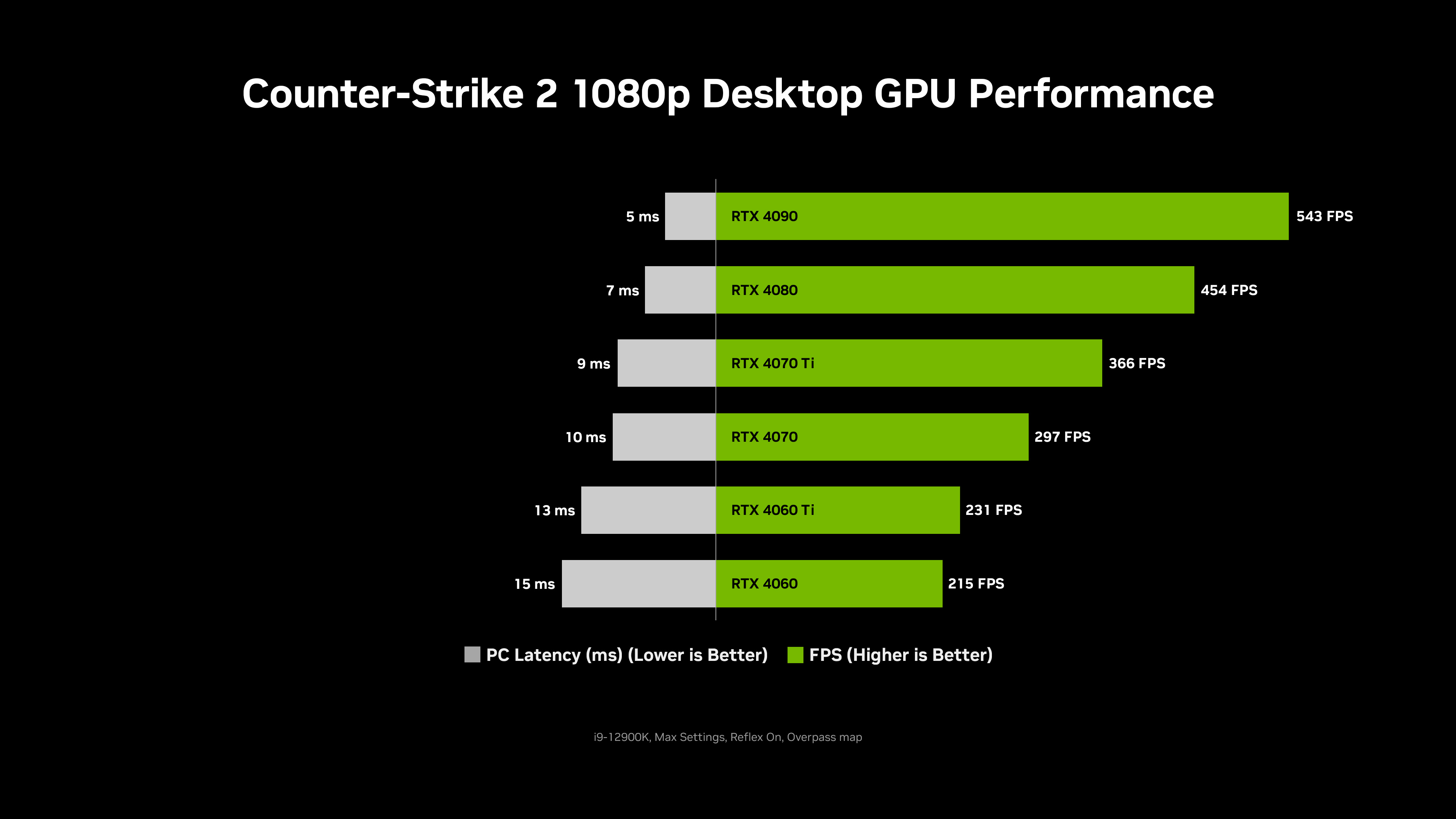
What all these moments have in common is that they all sit at the intersection of human reaction and technical responsiveness. In Counter-Strike, where fights are often decided before they fully register on screen, low latency is a part of the competitive baseline. NVIDIA Reflex is designed to reduce system latency by keeping the CPU and GPU tightly synchronized, ensuring player inputs are translated into on-screen actions as quickly as possible. By minimizing render queue delays, it helps players see opponents sooner and react with greater precision. The result is a more responsive competitive environment where mechanical skill, not technical lag, determines the outcome of key moments.

Ayrıntılı Esports verileri parmaklarınızın ucunda.
Abone olmak & keşfetmeye başlayın!


