

“Hard work paid off”: StarLadder on future plans, broadcasting realities and sponsorship boundaries of esports
The StarLadder Budapest Major was a clear signal that StarLadder is back in the top tier of Counter-Strike esports, returning to an industry that has changed dramatically since its last Major outing. Platforms have shifted, co-streaming has gone from experiment to standard practice, and sponsorship rules, especially around betting and casino brands, have become one of the most contested topics in competitive gaming.
With that in mind, we sat down with Andrew Yatsenko, Chief Strategic Partnerships Officer at StarLadder, to talk through what the company’s comeback really looks like from the inside. From long-term plans following the Budapest Major to the realities of working with multiple streaming platforms, the conversation touches on the operational and strategic constraints tournament organizers face today.
In the interview, Yatsenko speaks candidly about behind-the-scenes changes, why Budapest could evolve into a long-term esports base rather than a one-off host city, why Twitch casting numbers failed to meet internal expectations despite the scale of the event, and why the industry’s push toward tighter restrictions on betting-related content may be approaching its natural limits.
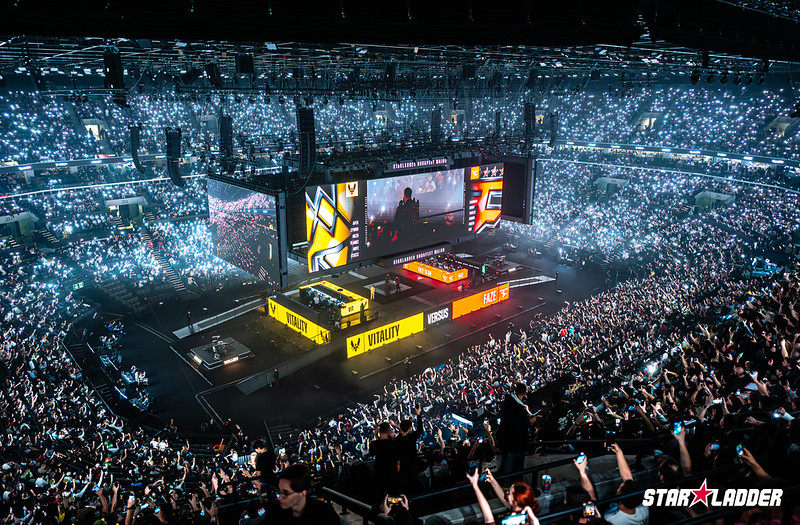
After six years away from hosting a Major, what ultimately convinced Valve and partners that StarLadder was ready to return, and how different is the organization behind the Budapest Major compared to the one that ran in Berlin in 2019?
Tier-1 and Tier-S events like Majors are planned very far in advance, usually around two years. In our case, that meant we pitched the Budapest Major back at the end of 2023 or something around that.
It had been quite a while since the last StarLadder Major, so we were genuinely happy to earn Valve’s trust again and bring another Major to life, this time in Eastern Europe. Location played a big role in that decision. We looked at several countries in a region we know well, and Budapest ultimately stood out. From an organizational standpoint, the fact that the same core team was behind both Majors also helped, it gave Valve confidence that we could deliver once again.
The Major was StarLadder’s second Counter-Strike event in Budapest this year. Why does this location work particularly well for you and do you see Budapest becoming a long-term hub for your future events, including potential Majors?
Budapest is a very convenient transport hub for hosting major esports events. It’s well connected within Europe, with good routes to the Americas and Asia as well, so from a logistics standpoint it’s a very natural choice.
We also found a strong local partner in Esport1, who supported us a lot on the ground - both during the StarSeries S19 Finals and the Budapest Major itself. Their local expertise made a real difference.
Because of that, I genuinely believe Budapest has the potential to become a long-term hub, not just for our events but for other tournament organizers, too. And honestly, the MVM Dome Arena deserves to host more major esports events, whether in CS2 or other titles. As long as certain services continue to evolve, the venue has significant long-term potential, especially given that esports remains a relatively new area for its operators.
After hosting the Budapest Major, how do you see StarLadder’s role in the future ecosystem of tier-S events: aiming to become a regular organizer again, or focusing on a smaller number of carefully selected tier-1 events?
Given the current tier-1 and tier-S CS event application system, it would be very naive to build our entire strategy around hosting Majors alone. That’s why the focus is on a small number of carefully selected tier-1 competitions. StarLadder has already announced its flagship StarSeries event for both 2026 and 2027, while planning a more consistent schedule of tier-2 tournaments alongside it.
That balance reflects the current demand in the ecosystem and represents a sustainable, viable business opportunity for us.
Without disclosing specific numbers, can you say whether hosting this Major was financially successful for StarLadder? And compared in broad terms, did the Budapest Major perform better or worse economically than Berlin 2019?
We’re still in the post-mortem phase, so it’s hard to point to anything very specific yet. What I can say is that, given the challenges and limitations StarLadder had to work with, it definitely wasn’t an easy ride for anyone in the company. But overall, I believe all the hard work and sleepless nights have paid off.
What can you share about the platform mix for the StarLadder Budapest Major? How deliberate was the choice to stream across Twitch, YouTube and other platforms, and how much did platform policies influence that decision?
Even though each Counter-Strike Major is a first-party event, it still operates under Valve’s Tournament Operating Requirements, so ensuring maximum accessibility for viewers is mandatory. That’s why choosing all the most popular broadcast platforms - Twitch, YouTube and Kick, was a very straightforward decision.
What’s important to clarify is that none of these platforms were affiliated with StarLadder or sponsored The Budapest Major in any way. Some of them did assist us with certain operational matters and general coordination, but for us they all were simply distribution channels.
Twitch has tightened restrictions around certain sponsor categories in recent years. How much did those limitations affect your distribution strategy or commercial planning for the Major?
It played a significant role, because those limitations made it more challenging for us to select and work with a global betting partner. Twitch, in particular, maintains a puzzling set of brand restrictions: certain casino and betting operators are banned, while others with virtually identical business models and websites remain permitted.
I won’t speculate on the logic behind those rules, but of course, as a platform, Twitch has the right to set its own policies, and we fully respect and comply with them. As everyone could see, our distribution strategy differed across Twitch and the other platforms, such as YouTube and Kick, and we made sure everything was fully compliant in each case.
How do monetization models differ between platforms for an event of this scale, and to what extent did those differences influence your decisions around which platforms to prioritize for content distribution?
One of the key learnings from the Budapest Major was that you can’t rely on sustainable content monetization if you’re multistreaming or don’t have direct, platform-inclusive sponsorships in place. Overall monetization across Twitch, YouTube and Kick was extremely low, even despite us producing more than 135 hours of premium, arena-level tier-S content and generating over 50 million Hours Watched on our own English-language streams.
The most frustrating part was Twitch’s performance. Not only was it underwhelming, it was significantly below any realistic expectations: its share of total monetization across 16 playdays accounted for as low as just 25%. That was roughly the same amount we generated on YouTube, but YouTube achieved that in only the final 4 playoff days, since monetization there wasn’t enabled during Stages 1-3.
Kick performed reasonably well, accounting for around 50% of total monetization. However, as a platform for content monetization, Kick becomes impactful only if the tournament is streamed exclusively on their platform, otherwise, the penalties applied to multistreaming are simply too harsh.
In short: Disappointed with Twitch, positively surprised by YouTube, and overall aligned with expectations from Kick.

How consistent are platform policies in the betting/casino sponsorships area? Do Twitch, YouTube and other platforms treat betting and sponsors similarly, or are the rules and enforcement materially different?
Sometimes it feels like a bit of a Wild West: everyone has their own rules and definitions of what is allowed and what isn’t. In some cases, it even seems that platforms themselves aren’t always fully consistent in how they apply those rules, restricting certain brands while allowing others with exactly the same similar business models. In some cases, websites across multiple brands are virtually identical, yet one operator is banned while another faces no restrictions at all.
There is clearly a broader global trend toward tighter restrictions around betting-related content, but taking that too far would be highly impractical. Even Riot has begun easing its stance on betting around some of their League of Legends and Valorant esports programs. If a platform goes beyond a reasonable line, content creators and organizers who rely heavily on betting partnerships (and betting is an integral part of the CS2 ecosystem now) will simply move to more liberal platforms, and that shift will happen very quickly.
When working with such sponsors, how do organizers balance commercial necessity with platform limitations, audience perception and the fact that some non-endemic sponsors may be reluctant to appear alongside partners from this category?
For us, it really comes down to being creative and transparent. Most brands understand how esports works and recognize that betting, especially in Counter-Strike, is an integral part of the ecosystem, so it has never been an issue for us.
In fact, the bigger challenge for non-endemic brands is still the perception of CS and other FPS titles as “violent games”, which can limit certain partnerships. But that has nothing to do with betting at all.
I can’t speak for other tournament organizers, but in our case this has never been a real issue. We focus on offering highly customized, well-integrated and differentiated partnership solutions for both betting and non-endemic brands, as the recent Budapest Major and our pool of sponsors clearly demonstrated.
Do you expect the relationship between esports events, betting sponsors and streaming platforms to stabilize or remain a recurring source of uncertainty for organizers?
It will never be stable because all of those mentioned parties are their own individual businesses who pursue their own business goals and interests. Of course, platforms are bigger and they can dictate and enforce their will and regulations, but so are betting sponsors who can just find the right channels on how to deliver their marketing goals and KPIs. And organizers are just a function here with a key requirement to be highly flexible, creative and innovative to be able to navigate in these stormy waters.
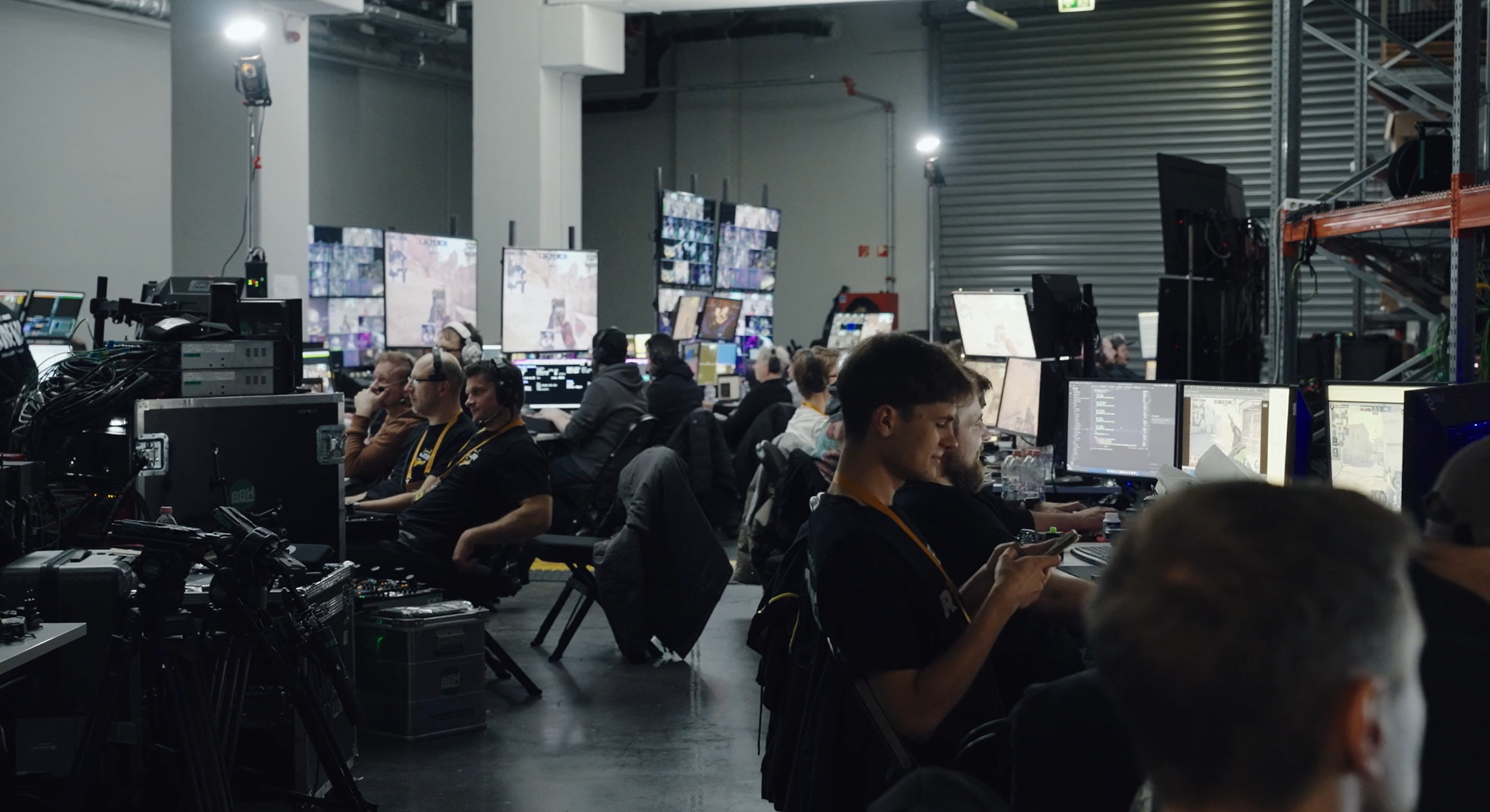
You ran separate broadcast feeds for Twitch and Kick during the Major. What practical or operational challenges did this create, particularly in the context of co-streaming and managing different platform rules?
Because our Global Betting Partner for the Budapest Major was on Twitch’s restricted list, we weren’t able to run any ads or brand placements for them on that platform. As a result, we delivered an alternative Twitch feed that excluded those brand placements.
At the same time, the full sponsorship inventory still had to be delivered on platforms without such restrictions, namely YouTube and Kick. That made the overall streaming setup significantly more complex, with dozens of different feeds in parallel: clean feeds, branded feeds, regional feeds and platform-specific versions. It caused some stress during the first few days, but once everything was aligned, the system stabilized and worked as intended.
Instead of limiting community co-streams to protect official sponsors, do you see a future where co-streaming rights themselves are monetized, allowing creators to keep their own partners while creating a new revenue stream for the organizer?
I think it’s important to understand that co-streaming isn’t something that’s automatically granted or something that can simply be demanded aggressively. Tournament organizers invest millions of dollars into producing premium broadcast content. We also sell media rights to regional licensees, who rely on the ability to monetize those broadcasts locally. In that context, access to co-streaming is a privilege, not an obligation.
From our side, we made co-streaming available to the majority of English-language creators, as long as they fully complied with our rules, particularly around delivering all sponsorship inventory on platforms where it’s allowed. At the same time, we didn’t restrict creators from earning platform-based monetization on their own streams, they kept that revenue in full for themselves.
We believe that’s a fair balance. It protects the value of very costly, high-quality content, ensures strong KPIs for event sponsors who actually fund the event production, and still gives creators access to premium, highly watchable content at no cost at all, while allowing them to benefit from what they do, and well-monetize their streams via platform tools.

Detailed Esports data at your fingertips.
Subscribe to & start exploring!
Mentioned events

Newsfeed


