

Garena Free Fire: Where accessibility and esports combined to forge a global phenomenon
As one of the earlier smartphone esports titles to leave an indelible mark in the industry, Garena Free Fire enjoys a well-earned reputation among fans. In a landscape as dynamic as mobile gaming, it has carved a unique and dominant position, achieving a level of global popularity that transcends geographical boundaries.
This success has been built on the pillars of accessibility, robust community engagement, and a thriving esports ecosystem. Coupled with the enjoyment fans derive from its gameplay, these factors have contributed to Free Fire's widespread appeal.
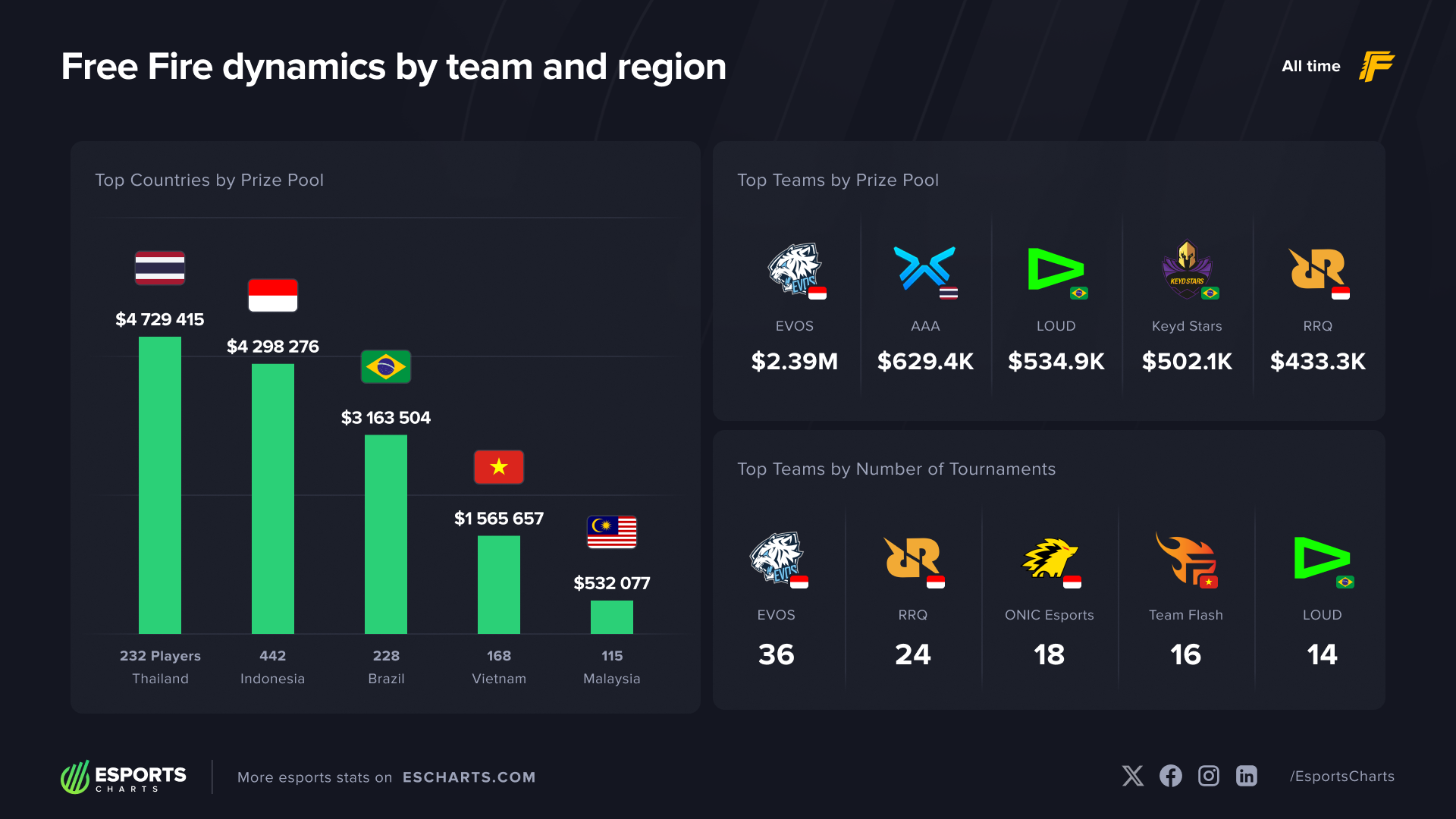
The title's impact has been particularly felt in regions like Southeast Asia and Latin America, which remain its strongholds when accessing the viewership numbers of its tournaments.
Perhaps the biggest reason for Free Fire being so successful in these pockets is its remarkable accessibility. In a world where mobile gaming is often synonymous with high-end devices, it stands out as a beacon of inclusivity.
The famous multiplayer shooter's optimised engine, designed to run smoothly on a vast array of smartphones, including those with modest specifications, has democratised the battle royale experience. This accessibility has been particularly crucial in emerging markets, where smartphone penetration is high, but access to high-end devices is limited.
In regions like Southeast Asia and Latin America, where affordability is a significant consideration, Free Fire's ability to deliver a seamless gaming experience on readily available devices has been a game-changer.
Southeast Asia, characterised by its vibrant mobile gaming culture, has emerged as a cornerstone of Free Fire's global dominance. Countries like Indonesia, Thailand, and Vietnam have witnessed an explosive surge in the game's popularity, transforming it into a cultural phenomenon. The region's vast and engaged player base has been instrumental in driving the title's growth, contributing to its status as a mobile gaming powerhouse.
Another key to this success lies in Garena's strategic approach to community engagement. The company has invested heavily in localising content, organising regional events, and fostering a sense of belonging among players.
Moreover, the cultural relevance of in-game items and events, tailored to resonate with local sensibilities, has further solidified Free Fire's connection with its Southeast Asian audience.
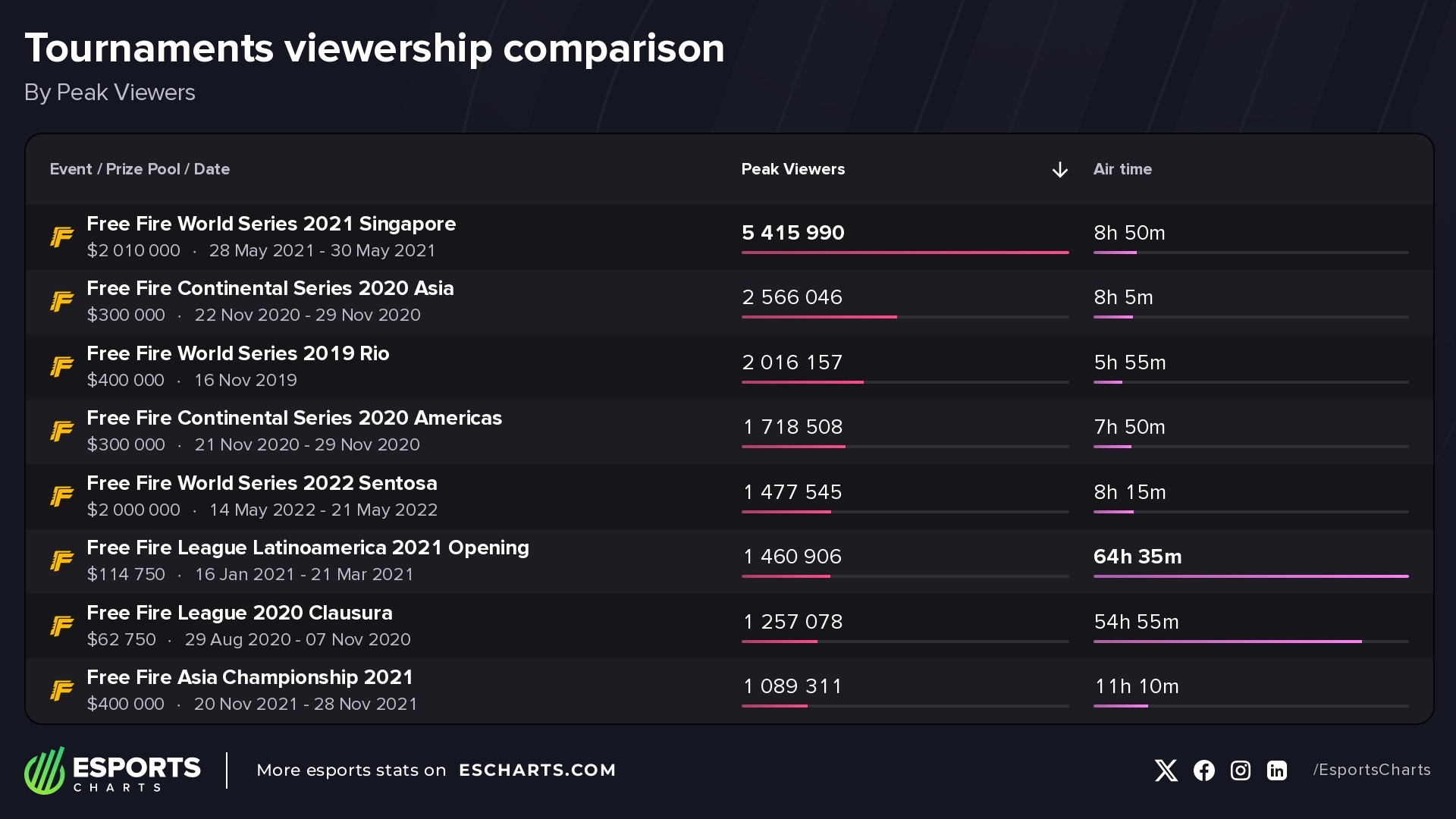
South East Asia's highly successful esports scene has played a pivotal role in elevating the game's popularity to unprecedented heights, with its fervent passion for competitive gaming translating into massive viewership at official tournaments. The Free Fire World Series (FFWS) 2021 Singapore is a testament to the region's esports prowess, having shattered viewership records by attracting millions of concurrent viewers.
National and regional leagues, such as those in Malaysia, Thailand, and Vietnam, provide a structured pathway for aspiring professional players, fueling the competitive spirit and contributing to the game's overall excitement. The integration of community elements into esports events, such as meet-and-greets with pro players and interactive fan experiences, has further strengthened the bond between the game and its dedicated fanbase.
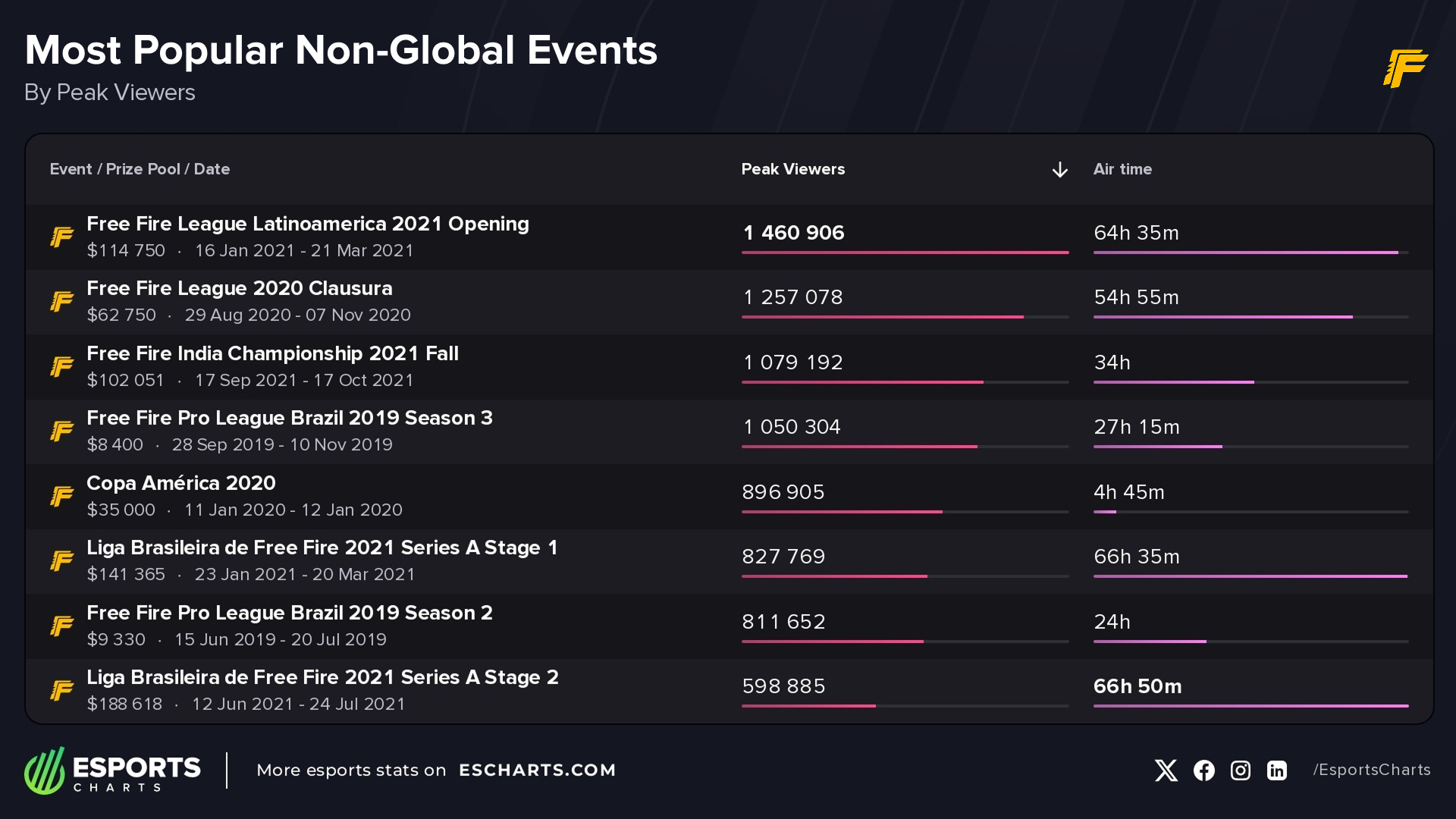
Latin America, with Brazil as its epicentre, represents another crucial stronghold for Free Fire. The region's passion for mobile gaming, coupled with its accessibility, has created a thriving Free Fire ecosystem. Like Southeast Asia, Garena has recognised the importance of localisation, tailoring content and events to resonate with the regional audience.
Brazilian Free Fire streamers and esports athletes have achieved celebrity status, inspiring a new generation of players and further fueling the game's popularity. The Liga Brasileira de Free Fire (LBFF), Brazil's premier Free Fire league, has become a cultural phenomenon, attracting massive viewership and showcasing the region's competitive talent.
In fact, a cursory look at the game's most successful events by audience reach proves Brazil's importance. The various leagues and competitions held in the country constantly end up among the game's most popular non-global tournaments.
The South American nation's success in cultivating such a rich ecosystem and its passionate fanbase have also led to the rapid growth of Latin America's esports scene. There is also a constant supply of competitive talent emerging from the nation, ensuring that teams representing it on the international stage often come back home victorious.
While no longer active, Free Fire achieved a lot of fame in the Indian subcontinent, where the ease of accessibility has made it a top option for mobile gamers. The title was successful in terms of competitive play as well, with the esports ecosystem being robust and events being held almost throughout the year, often attracting healthy online crowds.
Unfortunately, Free Fire was banned in India a few years back and has yet to return. While it continues to find players in neighbouring nations like Pakistan, Nepal, and Bangladesh, the absence of an Indian ecosystem has undoubtedly contributed to the game's recent declining audience reach.
These popular regions have one thing in common when trying to understand why the game enjoys such high acceptance among their players. Garena's commitment to high-quality production for its esports events has elevated the viewing experience, with the company investing in state-of-the-art broadcast technology, professional commentators, and engaging content, transforming tournaments into captivating spectacles. This ensures that a lot more followers are attracted to the in-game and competitive proceedings, often converting casual fans into hardcore players.
Of course, the frequency of Free Fire tournaments, spanning various levels of competition, keeps the community committed and provides ample opportunities for players to showcase their skills. Without a steady stream of events, fans might not be as engaged, which is never a good thing, as it is the connections that they form with teams or organizations that help leagues and championships succeed.
Free Fire's regular collaborations with other entertainment media figures are a big reason why it has endeared itself to fans across the globe
However, the path to sustained esports success is not without its challenges. Maintaining consistent viewership numbers, expanding into new markets, and adapting to the ever-evolving landscape of esports are ongoing endeavours.
That is why, apart from SEA and Brazil, there are FFWS leagues in Latin America, Pakistan, and the Middle East and North Africa (MENA). These competitions do not attract as many viewers, meaning they are not as prestigious and have smaller prize pools. This is also reflected in the number of slots they get at global championships, but they still form a crucial part of the esports ecosystem.
Nevertheless, Garena must continue to innovate and invest in its esports ecosystem to ensure its long-term viability. This includes exploring new formats, engaging with emerging platforms, and fostering a sustainable esports ecosystem that supports both professional players and amateur enthusiasts.

In conclusion, Garena Free Fire's global popularity is a testament to its strategic approach to accessibility, community engagement, and esports. Its ability to resonate with diverse audiences, particularly in Southeast Asia and Latin America, has propelled it to the forefront of the mobile gaming industry.
The game's vibrant esports scene, fueled by passionate communities and high-quality production, has further solidified its position as a global phenomenon. While challenges remain, Free Fire's strong foundation, built upon inclusivity and competitive spirit, suggests a bright future for the game and its esports ecosystem.
As mobile gaming continues to evolve, Free Fire's ability to adapt and innovate will be crucial in maintaining its position as a leader in the global gaming landscape.

Detailed Esports data at your fingertips.
Subscribe to & start exploring!


