

«Running big events online is extremely far from ideal» — interview with Silviu Stroie, PGL CEO
PGL has become one of the main newsmakers in esports this fall. The company held two of the largest championships of this year in Valve disciplines — Dota 2 and CS:GO. The tournament operator only acted as a contractor at TI10, but they conducted PGL Major Stockholm on their own, and achieved incredible success in terms of viewers.
Our partnership manager Vlad Solovei talked to Silviu Stroie, the CEO of PGL, after the final match of the major. He went us through the process of organizing the tournament, named the difficulties the company faced and explained why Sweden was chosen as a host of the event. Stroie also explained why he is not satisfied with the never-ending «online era» of CS:GO.
***
Why did you decide to hold a Major in Stockholm? What were the alternatives?
We considered a lot of cities. But Stockholm made a lot of sense to us because the very first CS:GO Major was played here in 2013; plus Sweden is one of the best, if not the best market for CS:GO overall. Lately, in the last 1-2 years, if you are checking statistics in Europe, it's mostly about Northern Europe and Eastern Europe when we’re talking about the number of players, viewers and so on. And yeah, Stockholm was a very natural choice for us because we knew the venue, the hotel. All the set-up was very convenient for us.
We looked initially into Poland, Romania and Denmark. These were the other countries that we looked at. But Avicii Arena was the only one that was big enough and had all the additional space that we'd need to run the major. And they also have the hotel, which is connected to our Avicii Arena, and it was extremely good for us.
Three most important reasons why we chose Stockholm is that we knew that a lot of Swedish people were going to attend the event. When we initially decided on Stockholm, we had no clue about COVID restrictions. But luckily for us, Sweden opened completely in the end and there are no restrictions now. And the third one is that it logistically made the most sense for us to run it in Stockholm: it's very rare when we have the hotel and the venue in the same place, we are not wasting a lot of time moving between hotel and the venue.
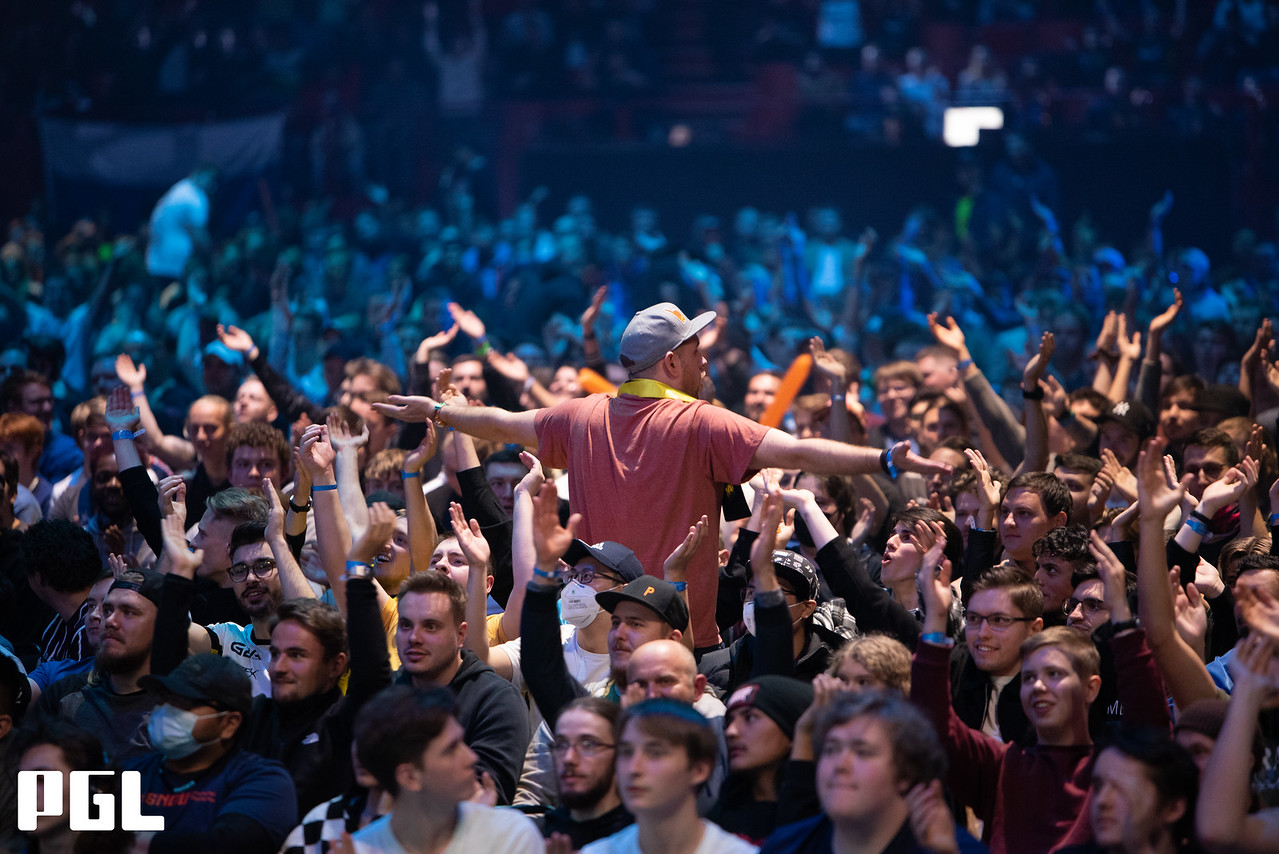
Didn't we all miss it a lot? Image courtesy: PGL
How did the process of organizing the event changed in terms of the pandemic? So what are the main difficulties when you try to organize an event in this situation?
One million changes. First of all, the main reason to work with Sweden was to make sure we are going to be able to get all the players in Stockholm. And the government issued an exemption for the travel ban, and everybody who was associated with this event was able to get in, which was extremely helpful for us. It was the first major in two years, and we wanted to make sure we are going to be able to run the event with a full house, which Sweden was also able to do, because there are no more restrictions around COVID in Sweden since September 29.
«For PGL, every single event that we are going to do from now on, we are going to allow only vaccinated players to participate»
Silviu Stroie
And the other issue that caused us a lot of work was vaccinated players. When we started the whole process, we calculated that we have around 60-70% of vaccinated participants, but just before the major I think we reached 98-99% percent of the players. It was a very good experience for us. For PGL, every single event that we are going to do from now on, we are going to allow only vaccinated players to participate. Otherwise it is going to be impossible for us to run offline events with crowds and everything else. It's impossible to have a giant sports event with a lot of people, but without players and commentators and the crew being fully vaccinated. Because they are the ones to be in contact with a lot of people during the event. And first of all, they need to be protected, and also the spectators need to be protected as well. So I don't see how you can avoid this.
You need to overcome a lot of problems during the process and everything's complicated. It could be an obvious answer, but maybe there are some things that became easier in organizing the event compared to pre-pandemic times?
Organizing an offline event during the pandemic, it's doubling the amount of work and stress that we have to go through with the COVID safety procedures. It's all true: it's way, way, way more complicated than it was before the beginning of 2020. On this level the demands and the requests from everybody involved are just way, way bigger than compared to any other event, and everybody's expectations are also much bigger. So, no. Unfortunately for us, there were no 'simpler' processes (laughs).
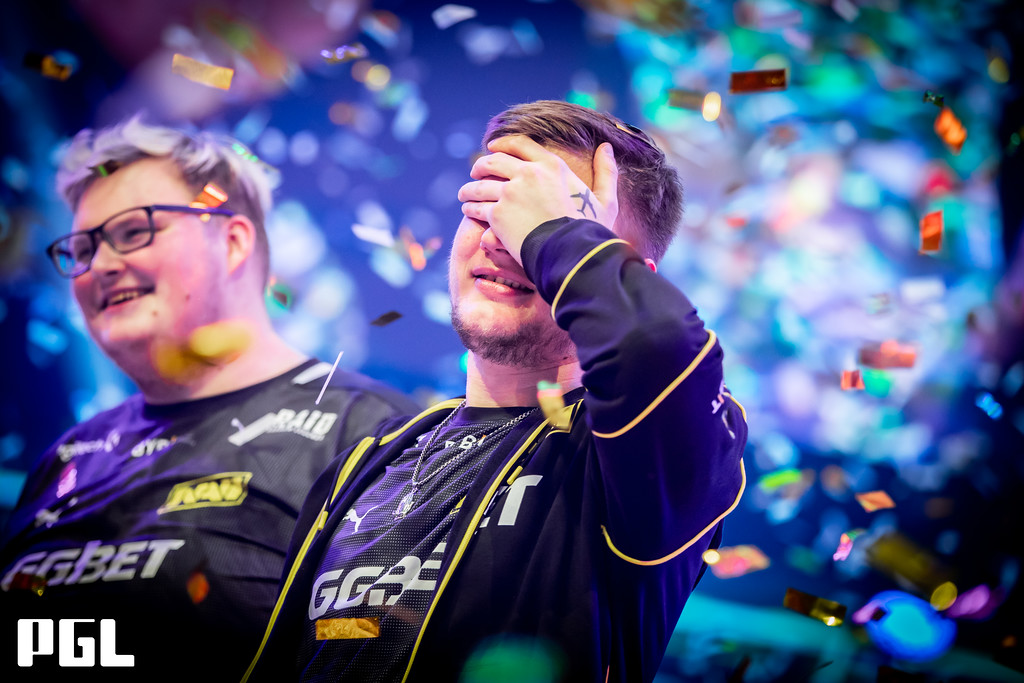
Could you elaborate on the whole process of organizing the event: how exactly does COVID prevent you from doing something you’d like to, but can’t?
For sure. We had one million plans, but were able to execute just some part of them. And we sacrificed several processes. I mean, the first thing that comes to mind is that there was no player signing session. Unfortunately, we also couldn't provide the press any help to have access to the players. We cannot risk the players to be infected and later on they wouldn't be able to play. When we initially started to draw the plans, yes, we had one million things and we were able to achieve most of them, but for sure, not all of them.
We are living in a different world and our first focus was and will be in the future to protect the players at all costs. Even that means you are going to have to make sacrifices, either in terms of the event or in terms of the broadcast. That's our main priority.
A lot of big events are now played online, and LANs are mostly an exception. Do you think it will change moving forward?
I think running big events online is extremely far from ideal. Since everything moved online, we are just seeing the same matches between the same teams all over again, — at least in CS:GO. It basically transformed into something that is done for the media platforms so they can have more content, but sacrificing the quality and the interest. I mean, it’s confusing. Who is the world champion? Why are you sure that this team is better than the other one?
I think online play is not helpful, and my hope is that starting with 2022, we are going to see more and more offline events. From my point of view the best year ever in CS:GO history was 2015. Everything changed after that, it was the last year when we had only offline events for the most part of the year. Almost every other week there was an offline event run by a different organiser with a different set-up.
«I think running big events online is extremely far from ideal. Since everything moved online, we are just seeing the same matches between the same teams all over again, — at least in CS:GO»
Silviu Stroie
Our focus for 2022 is going to be to try to run as many offline events as possible instead of running online events. But that's not up to us, it depends on what's going to happen with the pandemic. I see that certain countries around the world are way better than the others in terms of restrictions or what they are going to allow. And I'm pretty sure these countries are going to receive a lot of offline events in 2022.
Do you think the industry will get back to the old times, when we had a LAN every other week?
Yeah, that's my hope, but I’m not sure how it’s gonna happen in CS:GO right now. Because some other organizations involved in CS:GO are only interested in producing a lot of content without actually having an offline event. And I'm not sure how that is going to change, but for sure, some events are going to happen offline as well. Now it depends on how they are going to approach the vaccination, and how each city or country is going to approach the overall COVID restrictions: it’s still a gamble. When we started the whole process with Stockholm we had no clue that we were going to have such a giant success. But in the end, everything worked out really, really well for us. But I have no idea if we or others are going to replicate something like this in the next year.
The most requested thing by the audience for us was to spend as much time as possible with cameras on the players. And hey, we want to see the players you want to see: they are alive, they are playing, they're human beings and this is what everybody on the planet wants to see. Not the same web camera that you've seen one million times in the last 20 months or so.
How was Valve involved in the process of organizing the Major this time? Were you mostly operating on your own?
Overall we were able to decide the vast majority of things. They had the input here and there and every single time their input was very valuable. And only in specific cases they told us to do this or that, like coach rule and some other things. This event was a landmark in CS:GO, and it was the first one where I think we were able to do around 98% of the decision ourselves, and that was really good for us. Compared to Krakow Major, the processes were different, but better.

PGL Stockholm Major is among the most watched esports events ever
PGL Major was a never-seen-before success in terms of viewership statistics and even got into the top 10 overall by Hours Watched. What do you think are the reasons behind it?
I think a big part of it is that it was the first major in two years, the biggest CS:GO event in terms of prize pool, that made a huge impact. But also keep in mind that PGL is a 100% independent company. We don't have investors, debits or loans, and we are able to make swift decisions. Also, we decided not to accept digital platforms' demands, even if we lost money with that. We decided to focus on the show instead of running ads nonstop during the event. We were able to decide very fast: «Okay, we are going to have a lot of community broadcasters online»; we decided: «Hey, we are going to work with this and those people for a core stream». We were able to decide extremely fast.
Of course, our main priority was to please the community as much as we could. That's why we were able to attract so many viewers. And of course, we had a couple of amazing, amazing games in play. They were able to skyrocket our viewership. And yes, right now, our event is a landmark in CS:GO esports. You mentioned the top 10 esport events, the most important and remarkable thing for me is that our event is the only third party event in that top 10 by viewership, while others are organized directly by publishers.
Like I said, a lot of it comes from the fact that we are a completely independent company and we can decide extremely fast to do this or that. And sometimes we make good decisions, sometimes we make terrible decisions. This time around, it seems that most of the decisions we made were correct and in the end, everything transformed into the giant viewership that we had for the whole event.
Editor's note: the wording of the original utterances is preserved
Also Read: PGL Major Stockholm broke the record that was held for 4 years — it's most watched CS:GO event ever!

Detailed Esports data at your fingertips.
Subscribe to & start exploring!


