
The esports industry is constantly evolving, shaped by factors like technological innovation, the rise of artificial intelligence, changing sponsorship regulations, and the global expansion of competitive gaming. As we look ahead, these trends offer valuable insights into the future of esports. Based on data from Esports Charts, here are the key esports trends for 2025 that will influence teams, tournaments, sponsors, and fans worldwide.
Betting Sponsorship in League of Legends and Valorant
Esports betting has become a major revenue stream, closely tied to the competitive nature of games like Counter-Strike, Dota 2, and now, increasingly, League of Legends (LoL) and Valorant. These two titles, developed by Riot Games, have traditionally restricted partnerships with betting companies—but that’s changing in 2025.
It’s hard to imagine modern esports without betting, simply because it pumps so much money into the industry. But there are still some "untapped" areas in the professional scene where betting companies haven’t yet made their mark. However, by 2025, it looks like those gaps will start to shrink.
At the end of 2024, it was announced that Riot Games would finally allow League of Legends and Valorant teams to partner with betting companies. This kind of partnership had long been disallowed in the professional scenes of both games, but it seems like the developers are ready to loosen the reins.
Riot Games office in Los Angeles
Riot Games is looking for new ways to generate revenue for its leagues and teams. In mid-2024, Riot raised the minimum age for players in their tournaments from 17 to 18, specifically to allow clubs to "explore new revenue streams" (like advertising alcoholic beverages and more). When it comes to betting sponsors, however, Riot has set a few ground rules: according to Riot Games’ COO of Esports, Whalen Rozelle, betting brands will not be featured in official Riot broadcasts, and teams won’t be allowed to display betting logos on their jerseys. Another key rule is that Riot will vet all potential betting sponsors to make sure they align with the company’s standards.
Right now, this feels like a transition period and an effort to find middle ground. Riot has signalled to teams that it’s open to exploring new types of partnerships in this space, and now it’s up to the teams to propose options that work for both sides.
Riot Games titles make up a huge chunk of the esports scene, with dozens of tournaments, hundreds of teams, and millions of viewers. This means that League of Legends and Valorant could give betting companies a massive opportunity to invest. In theory, this could spark serious competition between different esports titles. It’s easy to imagine a betting company shifting focus from one game to another based on factors like audience size, and geographic reach.
For years, many top teams in Counter-Strike and Dota 2 have been sponsored by betting companies. While the biggest teams usually have long-term contracts, smaller clubs might struggle to compete with teams from League of Legends or Mobile Legends: Bang Bang and lose out on support from the betting sector. That’s not guaranteed to happen, but the fact remains: betting companies are now gaining access to some of the most popular titles in the world. It makes sense that they’ll want to invest heavily in those.
AI in Service of Esports
Esports has long been a testing ground for cutting-edge technology, it's where the latest advancements in computer hardware, peripherals, and live broadcast experiments (including AR tech and more) have been trialed. The next big thing for the industry could be artificial intelligence.
AI has become a global trend in recent years, with applications in everything from social media to the military. Now, esports organizations are starting to tap into its potential. Some are already using AI to improve their operations: tournament organizers are analyzing stream and ad performance, clubs are scouting the best players, and teams are gathering key intel on their opponents. With AI tools, all of this has become much easier.
“The trend that I see for esports, for both TO's and teams, is the increase in the usage of AI. I foresee TO's experimenting with AI in order to improve the spectator experience during broadcasts, which will lead to higher quality fan engagement. More teams will be using it for player training and scouting, and for assessing player performance. There are already a lot of data companies that use AI — such as image recognition, NLPs, etc. — and I predict we're going to see more adoption and innovation in 2025.
We've already built and are using some of these AI technologies in our scouting and training. The value we are getting is significant and that comes directly from the players and coaches who are using it. It's simply too impactful and efficient. There's just no way teams will continue to rely on manual processes for aggregating, filtering and presenting large volumes of data for the purposes of player training. Not only does it allow us to analyze larger amounts of data, we're also able to shorten turnaround time for important matches. Teams have only begun to explore the possibilities and it will become a serious competitive advantage in the coming years.”
Steve Arhancet, Co-CEO of Team Liquid
The Continuous Rise of Community Casting
Esports features a wide range of games, from various genres to different settings. However, almost all esports tournaments share common patterns that influence them, and one of the biggest trends today is community casting, which has become an integral part of modern esports.
Community casting refers to tournament coverage by content creators that run alongside the official broadcasts. Viewers engage with the casual vibe, as streamers can show more emotion, openly root for one of the competitors, and interact with the audience in a way that feels more personal. Community streams are often more fun, with inside jokes, memes, exclusive emotes in chat, fewer ads, and familiar faces in the chat. On the other hand, official broadcasts attract viewers with high production quality and additional content, like exclusive match analysis, player interviews, highlight replays, and more.
Now community casting is just as essential to tournaments as the official broadcasts. Take the World Championship series in League of Legends as an example: community casting accounted for just about 2.4% of the total watch time for Worlds 2022. By 2023, that number jumped to 32.8%, and in 2024, it reached an impressive 45.8%.

2024 World Championship trophy
The World Championship case isn’t unique. Community casting plays a huge role in Valorant, Counter-Strike, Dota 2, and other games. Viewers are more likely to watch an event if their favorite streamer is covering it, and this has become a general trend across the esports scene. It’s safe to say that by 2025, there will be even more streamers and community broadcasts in various languages and across different platforms.
“Collaborating with streamers is not a new concept in esports. Over the years, several esports titles have partnered with streamers, leveraging their influence to connect with wider audiences. However, these collaborations have often been limited to short-term marketing campaigns, lacking a focus on long-term impact and sustainability. To fully realize the potential of streamer collaborations, it is essential to explore innovative, sustainable, and mutually beneficial strategies. This requires a commitment to experimentation and adaptation. However, one thing is certain: the role of streamers in the esports ecosystem will only grow in significance.
At PUBG Esports, we firmly believe that the outcomes achievable through collaboration with streamers can be amplified far beyond their current level. Together, we can create an ecosystem that is not only more engaging but also more accessible and inclusive for fans worldwide.”
Minho Yi, Head of PUBG Esports
Interestingly, streamers used to be in a more vulnerable position: their viewership and activity depended on whether they were allowed to cover a particular tournament. Now, though, the situation has shifted. If a popular streamer decides not to cover an event, the tournament’s overall numbers often take a hit. Today, community casters and tournament organizers have developed a symbiotic relationship that benefits both sides.
However, as they’re also competing for the attention of sponsors, there’s always the potential for conflict in the future. For example, KFC recently became a sponsor of an entertainment event hosted by Spanish streamer Ibai ‘’ibai’’ Llanos, celebrating the release of the second season of Squid Game. In another case, the betting company BetBoom held the BetBoom Woman Cup in Counter-Strike, featuring popular Russian-speaking female streamers. The event was covered by community casters Vadim ‘’Evelone192’’ Kozakov and Maksim ‘’Shadowkek’’ Pavlov. These are just a few examples of how companies are shifting their advertising dollars away from professional esports and investing in entertainment events with streamers instead.
Regional Growth of Esports Audiences
The dynamics of broadcast languages can give us insight into how esports popularity is shifting across different regions. Some languages show consistent growth every year, while others have either plateaued or are even experiencing a decline.
Looking at esports in 2024, Vietnamese viewership is seeing steady growth. The same trend is observed with Ukrainian, Japanese, Mongolian, and French. It’s interesting to note that Vietnamese viewers are particularly engaged with international League of Legends tournaments and are especially active when watching Korean teams from the LCK. It’s clear that Vietnam is on track to become one of the biggest esports regions. Vietnamese streams are already catching up to Spanish ones in terms of audience reach, something that would’ve seemed unimaginable just a couple of years ago.
Meanwhile, Japanese, Ukrainian, and Mongolian fans tend to stick with their home teams and aren’t as active during other matches. The growth of the Ukrainian audience in 2024 was fueled by the success of new teams like Passion UA, although NAVI rosters still enjoy the most love from Ukrainian viewers. For Mongolian fans, their peak activity came during the Perfect World Shanghai Major 2024, when TheMongolz made history by reaching the playoffs for the first time. The team had a strong performance throughout the year in tournaments, and it finally paid off in the viewer statistics. As for French audiences, Rocket League was of particular interest for local espots fans, thanks to French teams being among the strongest.

Sodbayar ''Techno4K" Munkhbold / The Mongolz
However, some languages show a consistent downward trend. For example, English, Turkish, and Italian have seen a decline for several years now. In 2024, English dropped by 8% (after a 4% decline in 2023). This shift is closely tied to the growth of community casting and the introduction of new broadcast languages. Many viewers had to watch English streams because there weren’t broadcasts in their native languages, but that’s no longer the case. Tournament organizers are now focused on reaching the widest audience possible, using every available platform and language: even if it only adds a few hundred viewers to the overall stats.
By analyzing these trends, we can gauge how interest in esports is evolving in different countries and regions, and even predict future shifts. As more language options become available in esports broadcasts, audience statistics across different regions will become more accurate.
More Esports Organizations from Streamers
We’ve gotten used to seeing former professional players start their own esports organizations after retiring, and today’s top teams are often run by ex-players. Recently, popular streamers like Corentin ‘’Gotaga’’ Houssein have followed suit, launching successful projects like Gentle Mates in League of Legends. It’s clear that this trend isn’t slowing down, and we’re likely to see even more streamers transition into team ownership in the future.
In 2025, Disguised, a team owned by American streamer Jeremy ‘’Disguised Toast’’ Wang, will join the LTA North franchise league for League of Legends. He also has a Valorant roster that will compete in the VALORANT Challengers 2025 Southeast Asia. In just a year and a half, Disguised Toast has gone from launching his own club to fielding teams in major leagues, marking an impressive achievement for an esports startup.
League of Legends fans will also be watching the NLC Winter 2025 league closely, where Los Ratones, owned by Marc ‘’Caedrel’’ Robert Lamont, will compete. The team has an exciting roster with popular streamer Simon ‘’Thebausffs’’ Hofverberg and star Swedish player Martin ‘’Rekkles’’ Larsson. While it’s still unclear how ambitious their goals are or if they’ll break into higher-level leagues, it wouldn’t be surprising if, after a few years and some roster changes, Los Ratones ends up facing teams like Karmine Corp or KOI in LEC.
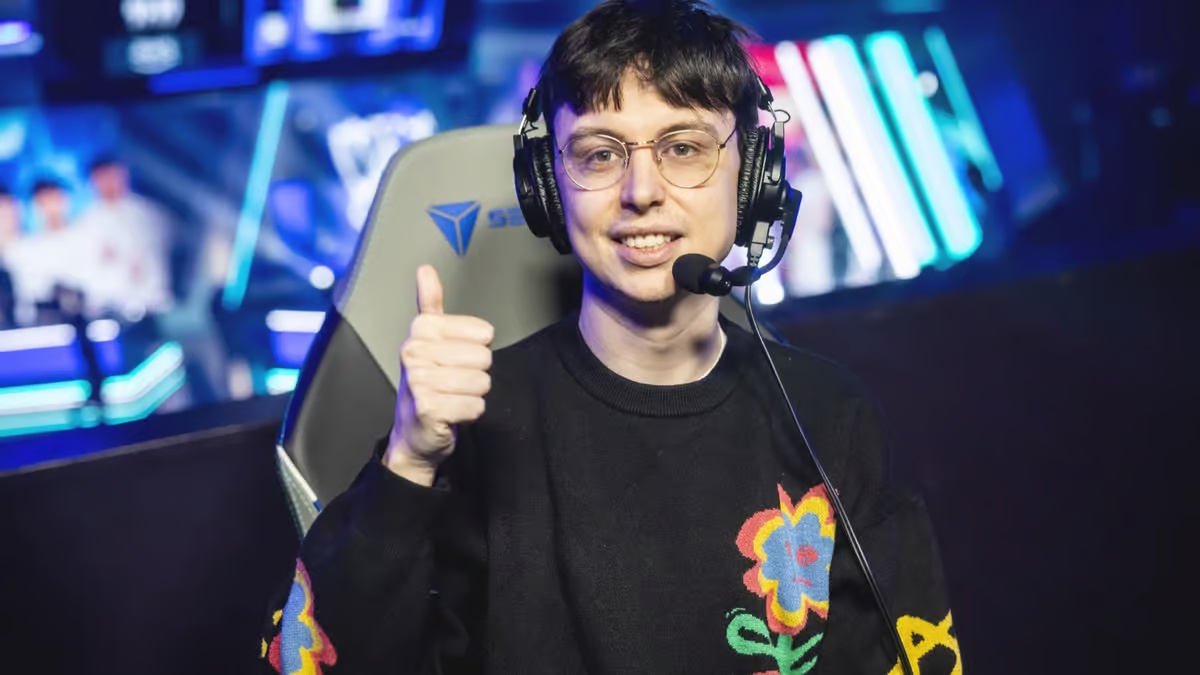
Marc "Caedrel" Lamont / League of Legends community caster
In 2024, German Counter-Strike streamer Mark ‘’ohnePixel’’, also a top community caster, made his esports debut. He formed the team DRILLAS in August, which made it to the Asia-Pacific RMR and almost qualified for the Perfect World Shanghai Major 2024. Unfortunately, the team didn’t make it to the Chinese tournament and was disbanded shortly after.
Another streamer with plans to start his own esports organization is Spanish player Oscar ‘’Mixwell’’ Cañellas. A former G2 Esports and Team Heretics player, and now a well-known Valorant streamer, Mixwell plans to launch Otakar Esports in 2025. The team’s goal is to "help young players from Spain develop on the professional Valorant scene".
Mobile Legends: Bang Bang paves the way to the West
Mobile Legends: Bang Bang is one of the most popular esports titles worldwide, with its audience coming close to only League of Legends. The game has a huge fanbase in Southeast Asia, and top-tier league broadcasts regularly attract millions of viewers. Plus, Mobile Legends is one of the few games with a thriving women’s esports scene, offering clubs some unique partnership opportunities.
In 2024, several Western esports organizations made moves into Mobile Legends: Bang Bang, either by acquiring rosters or announcing partnerships with Southeast Asian teams. For example, Team Liquid acquired STUN.GG, along with its brands AURA and ECHO, and their rosters in the MPL and MLD. Fnatic partnered with Indonesia’s ONIC Esports, and Ninjas in Pyjamas teamed up with Singapore’s Team Flash. Team Falcons also joined forces with AP.Bren, a top club from the Philippines.
Team Liquid ID roster in Mobile Legends: Bang Bang
French Team Vitality took a different approach, entering Mobile Legends through the female scene by signing Indonesia’s Bigetron Era. This was partly in anticipation of the Esports World Cup 2024 and through the EWCF Club Program, but as we mentioned earlier, these kinds of collaborations have a lot more untapped potential.
“Women's esports has generally seen an increase in viewership, indicating a growing demand and audience due to the increased visibility of female esports athletes. In 2024, MOONTON Games hosted several women's esports tournaments with local and global partners, including the Mobile Legends: Bang Bang (MLBB) Women's Invitational (MWI) 2024, the Asian Esports Games (AEG) 2024, and the IESF World Esports Championship (WEC) 2024. These tournaments have given female esports athletes the opportunity to compete at the highest level and gain recognition for their successes.
A moment of pride for the esports community came when MLBB athlete, Vivi “Vivian” Indrawaty, became the first female esports athlete to be featured on the iconic LA Sphere, ahead of the MWI 2024 – the first female tournament at the inaugural Esports World Cup. By fostering inclusive spaces and showcasing role models like Vivian, women's esports is inspiring the future generations of female gamers.
Support from mainstream sporting federations is also a crucial factor. Take the 32nd Southeast Asian (SEA) Games for example, where the women's event set a record-breaking Peak Concurrent Viewership (PCV) of 1,367,274. By incorporating the concept of national pride into esports, it has given female esport athletes the opportunity to become beacons of hope for their nations. In 2025, MOONTON Games will continue this legacy, as MLBB headlines the 33rd SEA Games in Bangkok, Thailand, featuring medalled events for both women's and men's categories.
At MOONTON Games, we remain committed to advancing women's esports through initiatives such as local women's tournaments, collegiate programmes, and development efforts to incubate local talent. By building robust ecosystems from grassroots to professional levels, we aim to empower a new generation of female players to thrive on local and global stages.”
Ray Ng, Head of Esports Ecosystem MOONTON Games
According to Esports Charts, several top European and American organizations are now exploring how to field competitive Mobile Legends: Bang Bang rosters. Whether they’ll succeed is still a tough question, considering there aren’t many top teams, and player prices have surged because of all the buzz. Still, there's plenty of reason to believe that by 2025, we’ll see new and exciting partnerships emerge in the game’s professional scene.
The Trend of Consolidation in Esports
The esports industry is massive and growing every year, but it’s safe to say it’s still far from uniform. At times, it feels like different games exist in parallel universes — they have their own audiences, different event locations, separate developers, and unique tournament schedules. Some games are hugely popular in certain regions, but barely get any attention in others. In the past, tournament organizers have tried to unite all the major esports under one brand. The best example of this is the World Cyber Games, which started in the 2000s and lasted for over a decade. Now, this push to unify esports scenes is gaining traction once again, this time thanks to the Esports World Cup and official recognition from the International Olympic Committee.
“Esports in 2025 is set to continue growing as a premier global sport. This growth is underpinned by innovation and strategic investments, particularly from Saudi Arabia, which are creating unprecedented opportunities for players and esports clubs to compete on the world’s biggest stage: the Esports World Cup. The EWC’s groundbreaking cross-gaming structure is the key driver of this evolution, bringing together the best players, games, and clubs under one banner.
Drawing a viewership of over 500 million people, the inaugural EWC, in partnership with Esports Charts, establishes the world’s largest esports and gaming event as a truly global phenomenon. With the EWC set to return to Riyadh this summer, and with the IOC-endorsed Olympic Esports Games coming to the Kingdom of Saudi Arabia this year, these events will redefine the way we compete, connect, and celebrate competitive excellence and sports fandom in the digital age, while building a new vision of what it means to be a global sport.”
Fabian Scheuermann, Chief Games Officer Esports World Cup Foundation

Esports World Cup 2024 Stage
What started as an experiment in 2023 turned into a solid example in 2024 and is set to become a major trend in 2025. For esports to keep growing, the industry needs more structure and predictability.
“Esports in 2025 is at a turning point, with new initiatives like the Olympic Esports Games offering fresh perspectives and attracting new types of fans. At the same time, the industry is refocusing on grassroots programs and defining ecosystems that cater to all types of players. As fans seek deeper connections with their favorite games through more engaging experiences around events and teams, it’s becoming increasingly challenging for new titles to secure a place at the table amidst massive investments and fierce competition. This year will undoubtedly play a crucial role in shaping the future of the industry.”
François-Xavier Deniele, VP, Esports & Competitive Gaming at Ubisoft
However, some experts in the industry think 2025 will be a tough year for esports. The sector will need to find new investment opportunities and adopt fresh approaches to measure its growth.
'“In 2025, esports will face critical challenges besides viewership numbers. As esports revenues stabilize post-pandemic, the industry must prove its value through deeper metrics, such as amateur tournament participation, in-game revenue, and community engagement. Demonstrating comprehensive impact will be key to attracting continued investment.
Despite high tournament viewership, proving direct game revenue and traffic impact remain challenging. While pre-pandemic big esports titles could aim to sustain itself through sponsorships and media license, the current landscape demands more rigorous value demonstration. Increasingly, esports relies on game publisher investments, compelling the industry to quantify its tangible contributions to game ecosystems and player engagement.”Jinho James Yang, Senior Director of Global Esports Center at Level Infinite, Tencent Games
What trends did we miss? Share your thoughts with us on Esports Charts account on X — we’d love to hear your perspective!

Detailed Esports data at your fingertips.
Subscribe to & start exploring!


