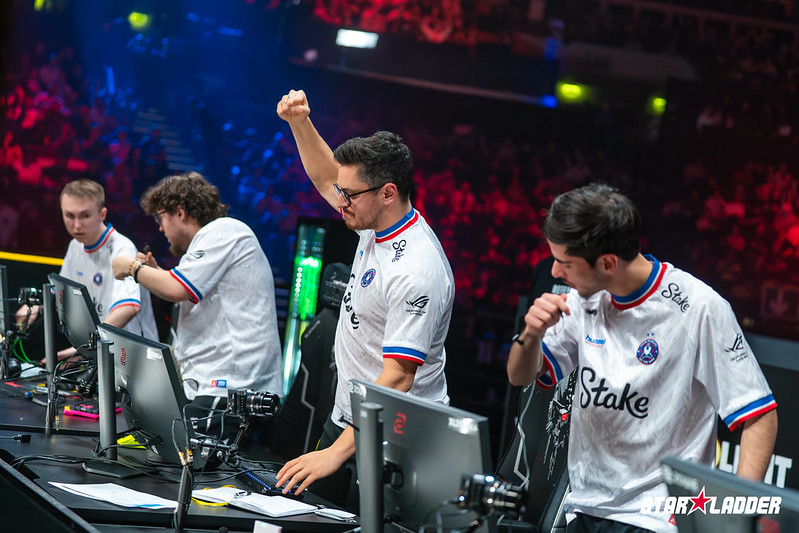

Team Vitality CS2 settings: Configs used by the Major winners
Team Vitality’s 2025 season was a masterclass in repeatable dominance, capped by a rare double Major year: BLAST.tv Austin Major 2025 in June and StarLadder Budapest Major 2025 in December. The obvious story is mechanics and calling. The less obvious story is interface engineering.
At Tier-1 Counter-Strike 2, a config isn’t a cosmetic preference. It’s the control surface between a player’s nervous system and Source 2’s sub-tick reality. You’re not “just picking a sensitivity.” You’re deciding how quickly your inputs are translated into the game, how much visual information your brain is forced to filter, and how reliably micro-adjustments land when the pressure spikes. Every setting shapes how targets are perceived, how much of the screen competes for attention, and how stable fine corrections feel in real time.
What makes Team Vitality stand out is that they don’t chase a single, rigid ideal. Their Major-winning roster reflects the idea that there isn’t one correct setup, only setups that are correctly aligned with role, playstyle, and responsibility. Each player’s configuration represents a different solution to the same problem: maximizing clarity and control in a game where milliseconds and pixels decide everything.
How this Data Was Discovered
Public settings data is messy. Players change small values, tournament PCs differ, and databases lag. The correct approach is:
-
Capture commonly reported values across multiple trackers
-
Treat resolution and crosshair as high-confidence categories
-
Treat polling rate and some video toggles as medium-confidence
-
Call out variance instead of pretending one perfect source exists
If you are chasing the same kind of consistency at home, this is where game booster software for PC gamers fits into the picture.
This article focuses on settings that materially affect outcomes: sensitivity architecture, resolution geometry, crosshair intent, and performance visibility tradeoffs.
Vitality’s 2025 Major-Winning Roster: Snapshot Table
|
Player |
Role Tendency |
DPI |
Sens |
eDPI |
Resolution Family |
Key Trait |
|---|---|---|---|---|---|---|
|
Hybrid AWP Anchor |
400 |
~1.8–2.0 |
~720–800 |
4:3 Stretched |
Stabilized scoped control |
|
|
IGL, Entry Pack Lead |
400 |
~1.9 |
~760 |
4:3 Stretched |
Visibility and decisiveness |
|
|
Lurk, Surgical Rifle |
400 |
1.77 |
708 |
16:9 Native 1080p |
FOV plus pixel clarity |
|
|
Entry, Space Creator |
400 |
~3.0 |
~1200 |
5:4 Stretched |
Fast target switching |
|
|
Anchor, Support |
400 |
~2.2 |
~880 |
4:3 Stretched |
Stable multi-kill control |
Numbers above are representative “common values” rather than a claim of a single immutable config.
ZywOo: The Stabilized Hybrid AWP Profile
ZywOo’s settings revolve around a single idea: eliminate error at the exact moment of commitment. AWPing in Counter-Strike is unforgiving. There’s no margin for half-decisions. You either land the shot or you hand over the most expensive weapon on the server. His configuration reflects that reality by favoring control over speed wherever it matters most.
Rather than pushing sensitivity to extremes, ZywOo operates in a low-to-moderate eDPI range that gives him stability without sacrificing responsiveness. His scoped aim feels subtly dampened compared to his unscoped movement, which is intentional. That slight resistance helps smooth tracking when following a moving model down a long angle, reducing the risk of over-flicking at the decisive moment. Even with hardware capable of higher polling rates, he often sticks to 1000 Hz, prioritizing consistency and predictability over theoretical gains.
In CS2’s sub-tick environment, the game faithfully records the precise timing of a shot, but it doesn’t solve the harder problem of crosshair placement. ZywOo’s setup is built to make that placement repeatable under pressure. Lower sensitivity minimizes micro-jitter, makes holding tight lines less taxing over long series, and keeps his aim calm when everything else in the round is chaotic. The result isn’t flashier mechanics, but fewer mistakes when a single click decides the round.
Resolution: 4:3 Stretched As A Mechanical Aid
ZywOo also stays firmly rooted in the traditional stretched resolution camp, most commonly playing on low resolutions like 1024×768 or closely related variants. For an AWPer, that choice is less about nostalgia and more about shaping how targets are perceived on screen.
Stretched resolutions horizontally enlarge player models, making shoulder peeks and partial exposures easier to read at a glance. That visual scaling helps when holding tight angles, where spotting a few pixels of movement can be the difference between a clean opening kill and a lost duel. The narrower, more centralized view also encourages disciplined angle play, keeping attention locked where the action is most likely to happen rather than spread across the edges of the screen.
The tradeoff is real. A reduced horizontal field of view means less peripheral information, and fewer visual cues coming from the sides. But ZywOo can afford that cost. His positioning, timing, and anticipation consistently put him in situations where he doesn’t need to rely on reactive scanning. Instead, the stretched setup amplifies what he already does best: arriving early to the right angle and being ready when the model appears.
Crosshair: Minimal Occlusion, Maximum Reference
ZywOo’s crosshair follows the same logic as the rest of his setup: remove anything that interferes with decision-making. The goal isn’t expression or visibility for spectators. It’s function. Small, static, high-contrast, with a tight gap, the crosshair is designed to exist as a reference point rather than a visual object competing for attention.
That minimal footprint serves two critical purposes. At long range, it avoids covering heads or key hitbox edges, letting the target remain visually clean even through a scope or on distant angles. Up close, the tight and consistent center gives ZywOo a reliable anchor for no-scopes and fast snap shots, where muscle memory matters more than visual flair. The result is a crosshair that fades into the background when it should, and becomes exact when it’s needed.
ApEX: The IGL Configuration For High Information Chaos
ApEX’s setup trends slightly faster than ZywOo’s, and that difference is deliberate. As an in-game leader who often finds himself at the front of executes, he needs to clear multiple common angles quickly without physically overworking his arm. That small bump in speed gives him the ability to transition between targets and positions efficiently while still staying under control.
There’s a reason most IGLs steer clear of extreme settings. Calling rounds, tracking utility, and managing teammate positioning already demand a heavy cognitive load. The last thing you want is a mouse that feels twitchy or unpredictable on top of that. apEX’s configuration reflects this balance: a moderate eDPI that stays responsive without being sharp, standard zoom behavior that doesn’t introduce surprises, and conservative polling choices that prioritize stability over marginal gains. The end result is a setup that fades into the background, letting him focus on leading the round rather than fighting his own inputs.
Radar And Clarity Priorities
For in-game leaders, visual clarity tends to matter more than visual flair. apEX’s approach reflects that mindset. His settings are tuned for readability first, favoring clean textures, stable contrast, and a radar zoom that supports big-picture decision-making rather than just immediate geometry. The objective isn’t to win the cleanest-looking duel. It’s to absorb enough information to make the right mid-round call while everything is unfolding in real time.
That same philosophy carries over to his crosshair choice. Where an AWPer can afford a needle-thin reference point, apEX opts for something thicker and more visible. During fast executes, the screen fills with smokes, molotov flames, HE debris, and tracer fire, all competing for attention. A slightly heavier crosshair cuts through that visual noise, reducing the chance of losing aim reference at the exact moment a decision or trade is required. Under stress, visibility beats elegance every time.
Ropz: The Native 1080p Outlier With High-Fidelity Input
Ropz is the roster’s technical edge case in the best way.
Why 16:9 Native Changes How You Play Lurk
While most professionals still gravitate toward 4:3 stretched for the simple comfort of larger player models, ropz goes in the opposite direction. His setup prioritizes information and clarity over scale, opting for a full horizontal field of view and higher pixel density. That choice delivers cleaner long-range reads, especially through narrow gaps where precision matters more than magnified silhouettes.
For a lurker, that tradeoff is crucial. ropz often finds himself watching rotations at the edges of the screen or holding angles where the entire duel is decided by who sees whom first. In those moments, confidence in what’s actually on the screen matters more than the apparent size of a model. His configuration isn’t about making targets feel easier to hit. It’s about ensuring that what he sees is accurate, readable, and trustworthy when timing and positioning do the heavy lifting.
Polling Rate: Chasing Input Granularity
Ropz is also closely associated with using very high polling rates on modern hardware, leaning into the benefits that come from faster and more frequent input reporting. At that level, the gains aren’t about raw speed so much as continuity. Higher polling reduces the delay between tiny hand movements and the next reported cursor position, making fine adjustments feel smoother and more connected, particularly in rifling situations where first-bullet accuracy is critical.
There are real tradeoffs to that approach. Higher polling increases CPU interrupt load and can introduce instability on less robust systems. But at Major-level events, where tournament PCs are carefully tuned and standardized, those constraints largely disappear. In that environment, ropz’s setup takes advantage of what high polling does best: removing subtle friction from micro-corrections and letting aim feel fluid rather than segmented when precision matters most.
Video Settings: Fewer Blurry Compromises
Native 1080p plus higher-fidelity visibility settings is a coherent philosophy:
-
If you are optimizing for identifying a shoulder pixel, do not destroy your image pipeline
-
Still remove clutter where it hurts competitive reads, but do not intentionally blur your world
FlameZ: The Entry Engine And The High-Speed Geometry Stack
Entry fraggers operate where the game is at its messiest. Close angles, rapid target switches, flashes detonating mid-screen, and bullets coming from directions you didn’t plan for are all part of the job. These are not clean, controlled duels. They’re reactive fights where hesitation gets punished instantly.
That context explains why flameZ’s configuration leans toward speed. His settings are built to keep his aim responsive when chaos breaks out, allowing him to snap between targets, recover after utility hits, and stay mobile while clearing space for his team. In entry roles, control still matters, but speed is what keeps you alive long enough to make that control count.
High eDPI: Why It Fits Entry Work
A higher eDPI fits the realities of flameZ’s role. It allows him to snap through 180-degree turns when pressure comes from behind, transfer quickly between multiple targets during a site hit, and clear tight corners without dragging his arm across half the mousepad. In entry situations, speed isn’t a luxury. It’s what keeps momentum alive when everything happens at once.
The tradeoff is precision. Faster settings always make micro-adjustments harder, especially under recoil and stress. That’s where compensation comes in. Strong wrist and fingertip control, relentless repetition, and deeply ingrained muscle memory do most of the work. Crosshair choices also matter, providing a firm visual center that anchors fast movements and keeps shots from drifting when reactions have to outrun chaos.
5:4 Stretched: Maximum Model Enlargement
Running 5:4 stretched pushes the stretched concept to its extreme. On a 16:9 panel, it aggressively enlarges player models horizontally and narrows the field of view even further, creating a distinctly tunnel-like visual experience. On paper, that sounds like a drawback. In practice, it makes sense once you consider the role it’s built for.
An entry fragger isn’t tasked with reading wide rotations or processing peripheral information. The job is to force contact, break space, and win the first fight. In that context, bigger close-range models are an advantage, not a liability. They reduce target acquisition time when clearing corners or bursting through smokes, letting reactions beat positioning. For flameZ, the loss of peripheral vision is a fair price to pay for faster visual confirmation when every millisecond inside a site hit matters.
Crosshair: Center Dot As A Tap Anchor
A center dot is unpopular among many riflers, but it makes sense for an entry who wants:
-
A hard this is the exact center reference
-
Cleaner first-bullet taps in the half-second after a flash pop
Mezii: The Anchor’s Middle-Ground Stability
Anchors need to do one thing exceptionally well: survive and multi-kill when the flood arrives.
eDPI In The Anchor Range
For anchor players, the balance shifts again. A mid-to-high eDPI range is common not because it looks impressive, but because it supports the realities of holding space. You need enough speed to transfer cleanly when two players swing together, but also enough control to sit on a tight angle for thirty seconds without your crosshair slowly drifting off target.
Anchoring isn’t about highlight reels or flashy mechanics. It’s about repeatability. The ability to hold the same line round after round, absorb pressure, and respond instantly when the hit finally comes. The settings that work here are the ones that stay stable under stress, letting control do the work long after patience has been tested.
Resolution And Video: Familiar Competitive Balance
Mezii’s setup reflects a classic professional balance, tuned around clarity rather than extremes. He sticks with 4:3 stretched to keep player models readable, especially in close and mid-range fights where anchors often take first contact. The visual choices are conservative but intentional, with enough anti-aliasing and shadow definition to smooth edges without introducing unnecessary blur or distraction.
Everything in the setup is geared toward visibility first. Reducing false visual noise matters when you’re holding an angle for extended periods, waiting for the smallest cue that a hit is coming. For an anchor, the goal is simple: spot the first shoulder, recognize the commitment instantly, and respond without hesitation. mezii’s visuals are built to support that exact moment, when reaction and decision collapse into a single action.
Teamwide Competitive Toggles That Matter
Even with their diversity, some choices are effectively universal at the top level.
Boost Player Contrast: Non-Negotiable Visibility
CS2 lighting can produce model blending in dark geometry. Contrast boosting reduces the time it takes to confirm that is a player.
If you are building a settings baseline, this is one of the first toggles that earns its keep.
NVIDIA Reflex: Latency Discipline
At this level, everyone cares about click-to-photon delay. Reflex reduces queued frames and improves the feeling that your input and the rendered frame are aligned.
It will not turn you into ZywOo, but it removes a category of avoidable disadvantage.
Shadows And Anti-Aliasing: A New CS2 Reality
In CS:GO, pros often nuked visuals for FPS. In CS2:
-
Shimmering edges can create false movement cues
-
Shadows can provide early information before a model is fully visible
So many pros accept:
-
Higher shadow quality than you would expect
-
Moderate MSAA levels to stabilize edges
The “Vitality System” Pattern: Role-Optimal Diversity
Vitality’s settings distribution is not random. It is role-aligned coverage.
Resolution Coverage
|
Setting Philosophy |
Player Example |
What It Buys |
|---|---|---|
|
Low-res 4:3 Stretched |
ZywOo, apEX, mezii |
Bigger targets, central focus, comfort |
|
5:4 Stretched |
flameZ |
Maximum close-range target size |
|
16:9 Native 1080p |
ropz |
FOV, peripheral reads, pixel clarity |
This creates a team that sees the map differently across roles:
-
The lurker gets maximum information width
-
The AWPer gets maximum target enlargement for snap windows
-
The entry gets extreme close-range enlargement
-
The anchors and IGL sit in the proven middle
Sensitivity Spectrum
|
Band |
Players |
Engagement Bias |
|---|---|---|
|
Low Control |
ropz, ZywOo |
Precision, first-bullet, long lanes |
|
Mid Hybrid |
apEX, mezii |
Clearing, transfers, anchor stability |
|
High Speed |
flameZ |
Entry fights, rapid transfers, chaos |
This is a coherent mechanical division of labor.
Legacy Major Winners: Paris 2023 Settings As A Bridge
Vitality’s 2023 Major-winning core (BLAST.tv Paris Major 2023) came from a CS:GO-rooted settings culture:
-
Stretched resolutions dominated
-
Launch options and legacy tweaks were more common
-
Hardware and video choices were optimized for consistency on older pipelines
The 2025 roster shows maturation:
-
Less obsession with legacy interpolation tweaks
-
More trust in default networking behavior
-
More willingness to run clarity settings because modern tournament hardware can brute-force performance
If you want the takeaway, it is this: Vitality did not find one best config. They evolved from a shared pro baseline into role-specialized engineering.
Practical Takeaways: Copy The Logic, Not The Exact Numbers
If you are trying to learn from Vitality, do not blindly copy a crosshair code and call it a day. Copy the principle that matches your job in server.
If You AWP Or Hold Tight Lines
-
Consider lower eDPI
-
Consider slightly slower scoped feel if you over-flick
-
Prioritize stable visuals, shadows, and clean edges
If You Entry And Fight Close
-
Consider higher eDPI if you constantly run out of pad
-
Consider more aggressive stretched geometry if target acquisition feels slow
-
Use a crosshair with a hard center reference
If You Lurk And Need Information
-
Test 16:9 native for peripheral reads
-
Favor clarity and pixel definition over exaggerated model width
-
Only use high polling if your PC can handle it without stutter
Conclusion
Vitality’s 2025 Major winners are proof that the highest level is not about uniformity. It is about alignment.
-
ZywOo optimizes for shot commitment stability
-
apEX optimizes for readable chaos and fast clearing
-
ropz optimizes for information, clarity, and input fidelity
-
flameZ optimizes for speed and multi-target violence
-
mezii optimizes for anchor stability and repeatable control
Their Double Major year was not because of settings, but their settings reflect a team that treats configuration like performance engineering: each role gets the toolset that makes its job easier, faster, and more reliable under the ugliest pressure CS2 can produce.
Header image courtesy of StarLadder

Detailed Esports data at your fingertips.
Subscribe to & start exploring!


