
Brief history of esports — from arcade games to mobile gaming
The esports industry is just a couple of decades old, yet it has already come a long way from the Stanford University campus to huge stadiums with thousands of spectators, where teams compete for millions of dollars. The Esports Charts provides a brief guide to the industry's major milestones for those who are new to esports.
Games as a byproduct of technological progress
Esports have only recently begun to blossom, but its roots go back to the 1970s. In 1972, on the campus of Stanford University, students held a tournament in Spacewar!, a game where two players controlled small spaceships and shot rockets at each other. The winner was 33-year-old biology faculty student Bruce Baumgart: he got a subscription to the Rolling Stone magazine for first place. Basically, this event can be considered the first big esports tournament.
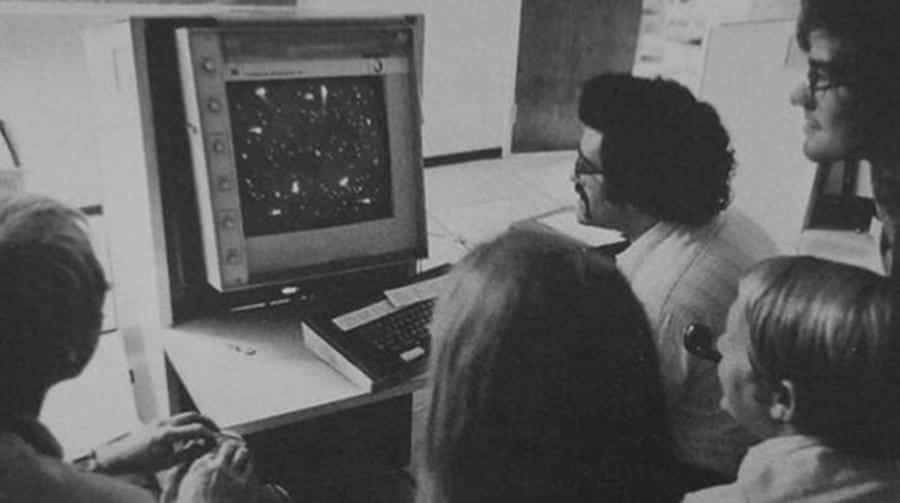
Then the video gaming industry developed by leaps and bounds. In the 70's, arcade machines became very popular, and in the 80's, Atari, Nintendo and SEGA Genesis released the first consoles with removable cartridges, which quickly captured the hearts of gamers. Also, there were many TV shows in the U.S. in the mid-80s, telling about game novelties, showing how to play Super Mario and Sonic the Hedgehog, organizing competition shows featuring major sports stars, etc.
Origin of up-to-date esports
In the early '90s, the main driver of esports was Nintendo, which considered e-competitions as an element of its promotional campaigns. 1990 Nintendo World Championships took place in 29 U.S. cities, and the finals were held at Universal Studios Hollywood in California. At that time, participants competed in Super Mario Bros., Rad Racer, and Tetris speedruns. There were similar formats at Nintendo Campus Challenge in 1991 as well as at Nintendo PowerFest and World Game Championships in 1994.

Shooters began to gain an audience at about the same time thanks to the popularity of Doom and Quake. Gamers who had previously mostly played various platformers really enjoyed aiming and shooting: competitions in speed and reaction reached a new level. LAN game parties, when a group of friends met at someone's house to play via the network, began to enjoy great popularity.

In 1996, the legendary Evolution Championship Series (also known as EVO) came to life, where gamers from all over the world competed in popular fighting games. While the participants of the first tournaments played only arcade versions of Super Street Fighter 2 Turbo and Street Fighter Alpha 2, now EVO features about a dozen different titles.
In 1996, the first QuakeCon was held in Dallas — a couple of dozen Doom and Quake fans gathered in a hotel conference room for a chance to win a few t-shirts at the tournament and talk to the developers from id Software. Afterwards, QuakeCon became one of the oldest annual esports tournaments.

In 1997, the Red Annihilation Quake tournament final was held at the E3 show in Atlanta. Dennis 'Thresh' Fong became the winner, outpacing more than 2K participants in the battle for the grand prize — Ferrari 328 GTS owned by id Software founder John Carmack. That same year, Cyberathlete Professional League was organized — the first professional esports league that united players from different countries. Later it was followed by the World Cyber Games, Electronic Sports World Cup and other championships, which formed the basis of the modern esports scene.
Computer club culture
In the early 2000s, the gaming industry saw another transformation. Solid home Internet in those days was a very expensive thing to have, and taking your computers to your friends to play on the network was simply inconvenient. As a result, the demand for collective interactive leisure led to the development of a large number of computer clubs, which later became the cradle of the modern esports industry. It was clubs that finally formed the gaming community, where regular tournaments and championships began to take place, and the adjective "professional" began to be added to the word "player".
A personal brand in esports
Perhaps the biggest esports star of the early 00's was the American esports player Jonathan 'Fatal1ty' Wendell. He won over $500K in his career, playing at Quake, Painkiller, Aliens versus Predator, Doom tournaments and other disciplines. Wendell was one of the first to realize that esports players can and should monetize their brand, and when his career ended, he founded his company named Fatal1ty, Inc., a retailer of computer hardware products for gamers. Afterwards, many other top gamers were inspired by his example, and started to use their brand to promote their business: they started opening up esports schools and their own clubs, producing merch, starring in commercials, etc. For example, Faker, s1mple, Zeus, n0tail, NOBRU, and others followed this path.At the dawn of their development, computer clubs differed greatly from one another. One might have three to five medium-sized computers, another might have several hundred. Only the game "menu" remained the same — Quake, Half-Life, Counter-Strike, StarCraft, Warcraft, FIFA, etc. Most often the focus was on multiplayer disciplines, so you could play with friends.

Each computer club formed its own community with its own preferences. Some were fans of shooters, others favored RTS, etc. Regular interaction within the community inevitably led to competition among the players. Teams or so-called "clans" began to be formed, which played against each other for the right to be called the champions of the club. Afterwards, the best teams of different clubs played in city competitions, and if they were lucky — in national or even international tournaments.
The mecca of computer clubs has always been South Korea, where playing in such places has become something like a national cultural leisure activity. It is not surprising that the world series of World Cyber Games tournaments, which for many years had the unofficial status of the "Olympics for gamers", was born in South Korea. It was South Korea that coined the term "esportsman" — the name given to StarCraft players who played in pro-league tournaments with matches broadcast on TV. The only way to become an e-athlete was to obtain a special license (by winning qualifying tournaments). These licenses gave players a lot of nice bonuses: for example, you could get an exam deferral or combine a gaming career with military service.
Esports as an international phenomenon

High-speed Internet became the gateway to global esports. Tournaments started to expand, as now it became possible to determine not only the champion of a club or city, but even the champion of the country online. It also became possible to compete with players from other countries — players who were sometimes separated by thousands of kilometers could play in the same tournaments. All this led to a healthy competition — slots at competitions began to be awarded not to those who lived closer or could come to a club, but to those who played better. The growth of competition naturally led to more spectacular tournament matches, because when you play online, it is not enough to be the strongest player in your city or country — you have to compete with the whole world. It was at about this point when professional players began to get their first sponsors, and the top teams began to acquire fans and gradually began to turn into brands.
With the transition of the esports scene to online, global tournament operators emerged, responsible for hosting the competitions. ESL, founded in 2000 in Germany, is one of these companies. Now it is one of the most influential organizations in the industry. Its platform covers dozens of countries and game disciplines, with competitions taking place every day.

Big money in esports
International tournaments, combined with live broadcasts, gave a new boost to the development of the esports scene. Large investors began to look at the industry as a profitable investment — that's how big money came into esport. Global companies and brands began to use esports as a means of advertising and a tool of communication with the youth audience, media holdings began to buy and resell the rights to the tournament broadcasts.
In the mid-00s, esports got its own television. Whereas in the past one could watch tournament matches only in a computer club, literally standing behind the participants, the online tournaments deprived the viewers of this option. Streaming services like Own3d.tv and Justin.tv (current Twitch) helped to solve this problem.
Twitch is considered the most popular platform for broadcasting esports in North America and Europe, but YouTube Live, Facebook Gaming, Afreeca TV and other platforms are also popular in other regions.
An important stage in the development of esports was the moment when the game developers themselves began to sponsor the competitions in their own titles. This trend was followed by Valve, Blizzard, Riot Games and other studios. League of Legends and Overwatch franchise leagues, where players received salaries and even official employment, came into being. Affiliate leagues appeared in CS:GO and Rocket League, whose members received a share of the advertising and media rights sales.
In 2011, Valve held the first The International, where the Natus Vincere team received a million dollars for the victory. Prior to that, no other event offered esports players an opportunity to compete for such sums. The International became a trigger, which attracted the attention not only of the entire community, but also of the international press — the story of the millionaire gamers was of not acquainted with the games. Ten years later, more than $40 million was offered at The International 2021, a record among all esports tournaments and disciplines.

It was extremely important for the development of the industry that other companies followed Valve's example and started to increase the prize pools of their tournaments. First, this was important in terms of image, media coverage, and competition. Second, it stopped players leaving their disciplines for Dota 2 for the sake of more prize money (for instance, a lot of Heroes of Newerth pro players did so).
So called "video-gaming nerds" turned into superstars and Influencers with millions of followers on social networks, enjoying the same level of respect in society as professional athletes and Olympic champions. Every year esports tournaments are getting bigger and bigger, and the prize pools have grown to millions of dollars. Large tournaments are no longer held in computer clubs, but gather thousands of spectators in large football stadiums.
Coronavirus and a return to online
At the beginning of 2020, the entire world was hit by the pandemic. Coronavirus made changes in almost all spheres of life and the digital entertainment industry. Movie companies stopped making movies and TV series, musicians canceled concerts, international exhibitions were closed, etc. Esports were no exception, that is why all major LAN tournaments were canceled for safety reasons — many e-athletes could not attend them because of the closed borders and strict quarantine restrictions that did not allow crowds of people in the halls or stadiums. Due to force majeure circumstances, the entire esports industry was once again confined within the online bounds.

The esports industry was not as badly affected by coronavirus as many other industries. Players and teams continued to compete and perform in tournaments, but mostly online. Major LAN events were canceled due to logistical issues — many players simply could not travel to tournaments due to strict quarantines, non-functioning embassies and other limitations. For example, some participants of The International 2021 from China could not return home for several months, as they had to undergo several quarantines and take many different medical tests.
Now the major organizers have already developed common safety protocols, vaccines and collective immunity have started to work, players are once again free to travel to competitions in different countries, and tournament operators are again gathering spectators in stadiums. The spectators themselves clearly missed the atmosphere of LAN tournaments as well. For example, PGL Major Stockholm 2021 in CS:GO, The International 2021 in Dota 2 and the 2022 World Championship in League of Legends set records for Peak Viewers in their respective disciplines.
Mobile esports
In recent years, mobile games such as Free Fire, Mobile Legends: Bang Bang, PUBG Mobile, Arena of Valor and other disciplines play an important role in the development of the esports industry. This is particularly true in countries where many gamers can not afford a high-powered computer or there is no good Internet (for example, in India).
Mobile esports is in no way inferior to the classic one — there is a great number of tournaments too, which offer prize pools of millions of dollars (the Honor of Kings International Championship 2022 is expected to have a $10 million prize pool). Mobile games even surpass PC games by the number of viewers. For example, Free Fire World Series 2021 Singapore was watched by 5.4 million Peak Viewers — so far it is the absolute record in esports.

Female esports have also begun to actively develop along with mobile esports. The examples of Valorant, Mobile Legends: Bang Bang, and CS:GO, where professional female leagues and tournaments have appeared, show this particularly well. In addition, individual tournaments for children have begun to appear — some disciplines, such as Splatoon, already hold competitions for elementary school students.
In the past, many experts believed that the future of esports will be closely linked to virtual reality helmets, but now their opinion has shifted in favor of gaming smartphones. Modern mobile esports mean "esports in your pocket". It is more compact and cheaper (compared to PC or bulky VR headsets), and therefore more accessible to users. It is the ability to play anytime, anywhere that will determine the future development of the entire industry.

Detailed Esports data at your fingertips.
Subscribe to & start exploring!


