




North American Shooter Landscape — how viewership for Call of Duty, Halo, and Overwatch is evolving
Call of Duty, Halo, and Overwatch are some of the most popular esports disciplines within the North American sphere. These games, especially Call of Duty and Halo, are the foundation of the North American esports industry. They have been some of the most popular shooter esports disciplines in the region for years and for all the work they’ve done building the North American structure and market for esports they remain hugely popular in this area of the world. These games appeal to a largely English-speaking audience more so than other international games of the genre, like Valorant.
All three of these esports disciplines have become more conscious of their viewership and have made concerted efforts to improve the health of their broadcasting ecosystem. Throughout this article we will take a look at the efforts these industry leaders have made, and whether their viewership is growing or not. Our data analysts at Esports Charts have prepared data for a comparative analysis of these disciplines, comparing the first half of 2022 to the H1 performance of 2023.
Call of Duty
Call of Duty represents the largest esport of the three in terms of viewership. The game series started to receive competitive attention in the late 2000s, with local LAN events and even championship series starting to take form. In 2019 Activision announced a revamped Call of Duty League, this league functions as the official franchise-based platform for competition in the esport.
Critically, Activision had a three-year deal with YouTube to be the official broadcasting platform for the League. The first three years of the new League were all exclusively broadcasted to YouTube, but coming into 2023 the league announced that the broadcast would no longer be platform-exclusive, with streams coming to Twitch.
This ultimately proved to be a good decision for viewership, as Twitch is still the preferred streaming platform for English-speaking audiences. Comparing H1 of 2022 and 2023, the viewership for the league on Twitch grew by 1500%. Not only immediately more popular on Twitch, but the lack of an exclusivity deal also opened the door for community streamers to cover these events on their own personal Twitch channel.

Subliners, the champions of the Call of Duty League Playoffs 2023, via Call of Duty League
Esports disciplines like Valorant have already proven that watch parties and costreams are a profound source of viewership for events, with community streamers sometimes being the most watched channels of events. Community casters like scump and Zoomaa have become integral to the league’s viewership. When we looked back at the Call of Duty League 2023’s regular season in full, we found that scump was roughly one-third of all viewership in terms of Hours Watched. At earlier points during the season, scump was actually the most-watched channel, and he was much more successful than the official YouTube stream for the league overall.
How do we know the move to open up Twitch streams was important for English-speaking audiences in particular? Well, between 2022 H1 and 2023 H1, English viewership experienced massive growth. The language grew to triple its size in terms of Hours Watched and now makes up for almost the entirety of the discipline’s viewership. Spanish, which was previously 13% of all viewership in 2022, actually experienced a large drop-off in viewership in 2023. Previously there were events in the HCS that catered to Spanish-speaking audiences, such as the 2022 Mexico Super event, and in 2023 we do not see any more of these major events for Spanish-speakers.
Call of Duty League has seen a huge growth in viewership in only a year, with the move to Twitch being the reason for a large portion of this. Call of Duty has always been one of the most famous game series worldwide, but the recent decisions by the Call of Duty League in how they handle their broadcasting have helped them to tap into their full potential and achieve exponential growth.

Hours Watched data for H1 2023 (bright) compared to H1 2022 (dark)
As seen in our data, Call of Duty experienced the largest growth of any of these three disciplines and expanded its gap to rival Overwatch. Nevertheless, Overwatch has also seen an increase in viewership, growing 88.7% in only one year’s time. What methods have the Overwatch League taken to cultivate a growing viewership?
Overwatch
The Overwatch League has been running since its inaugural 2018 season, when it reached hundreds of thousands of concurrent viewers and millions of hours of watch time. Despite initial success, the League found difficulty repeating this success and achieving healthy growth in viewership. The League’s Playoffs were becoming less and less popular every year, as you can see in this article summarising the 2022 League’s final statistics.
The early days of the Overwatch League were filled with controversies and scandals. As Blizzard came to grips with managing a PR-friendly esports system and inclusive atmosphere different scandals came and went. The League’s owner and organiser wanted to present a favourable image to all fans, and often found themselves at odds with their professional players, having to give out fines and punishments for actions they felt harmed the integrity of the League.
Recently Blizzard also was in the news as they could not reach an agreement with their publishing partner NetEase. NetEase published Blizzard titles for the Chinese market since 2008, but with negotiations breaking down between the two companies Blizzard has been forced to remove its games from the Chinese market entirely. Losing such a big potential market for their titles is a big blow to the company. Blizzard has also been downsizing their Overwatch League department and it recently came into the news that Blizzard will pay teams a $6,000,000 USD termination fee to not renew their contracts with the league. With such dark clouds resting over the future of Overwatch’s esports scene, how is the viewership growing?

The 2022 season of Overwatch’s esports division was also struggling to draw in viewership. The season debuted featuring the Overwatch 2 beta, but viewership continued to decrease throughout the year. However, the official release of Overwatch 2 came late in 2022, and that year’s Playoffs saw a 156% growth compared to the previous year. The 2022 Playoffs reached 9.9M Hours Watched, meaning it was watched more than the entirety of H1 2022, 9.2M Hours Watched.
The 2023 Overwatch season also saw the league allow Contender teams to compete against the Overwatch League teams. Allowing a mixture of the top tiers of the discipline enabled the esport to hold more tournaments and draw in more consistent viewership. The number of tournaments in H1 of 2023 was double that of how many were hosted in H1 2022.
Critically, Overwatch’s viewership is much less top-heavy. In H1 of 2022, almost 80% of all total watch time was due to one tournament. Compared to H1 2023, where the most watched tournament contributes almost 40% to the total watch time, the discipline has developed a much healthier viewership spread.
We can obverse in our data that the growth of the Overwatch League is thanks to the English-speaking community, as since 2022 English is the only language to experience a major boost in viewership. Korean was previously the second-most popular language for the esport with 8.5% of all watch time coming from Korea, but since 2022 they have experienced negligible growth and Korean viewership now only makes up 4.7% of viewership. Other smaller languages have grown in watch time, but overall English has completely taken over the Overwatch scene.
Two key factors are affecting the viewership of Overwatch in 2023. Firstly, the League lost its exclusive deal with YouTube. Although there is no longer an exclusivity contract, the OWL broadcasts remain on YouTube. YouTube streams, including the official Overwatch League channels, saw a 29% increase coming into 2023, but without an exclusivity contract with YouTube anymore, Twitch was free to grow unchecked.
In H1 2022, Twitch was less than 1% of all viewership for the league. By H1 2023 this figure was 32%. This figure represents the efforts of community casters to showcase and engage with the esports discipline. The Overwatch League remains YouTube-exclusive, with all official streams for the league taking place on the red platform. However, events such as the World Cup or Contenders series are broadcasted to Twitch. For these events outside the OWL, Twitch is the dominant platform for viewership. Blizzard is aware of the power of costreaming, seeing as they announced an official Watch Party Program this year.
The other factor influencing the growth here is Twitch Drops. Twitch Drops are successful in increasing viewership everywhere. Whether supporting a new release like Diablo IV, bringing viewership to smaller streamers of games like Rust, or helping an esport grow, the Drops always bring in more viewership. It’s not uncommon for some of the most-watched streams of the discipline on Twitch to have their title start with the all-important “Twitch Drops Enabled” message.

Peak Viewers data for H1 2023 (bright) compared to H1 2022 (dark)
Turning our attention towards Peak Viewers so far, we can see Overwatch hasn’t experienced much growth there. The Twitch streams of events outside the OWL and the busier OWL schedule have enabled the growth in Hours Watched. Call of Duty actually experienced a drop in Peak Viewers for the first half of 2023, just proving how effective their measures have been in increasing the watch time for the events overall.
The final esport of the three, Halo, was the only esport we’re analysing today that experienced a decline in viewership coming into 2023. Despite a minor increase in Peak Viewers, the viewership of the tournaments throughout 2023 so far have been on a downturn.
Halo
In 2018, the Halo Championship series finished up its year of events and tournaments only to take an indefinite break. The series eventually returned for 2021 following the launch of Halo Infinite. The series was launched with a prize pool of $3,000,000 USD announced by the organisers, and many household esports names like NAVI, FaZe Clan, OpTic Gaming, and Cloud 9 were announced as partner teams for the HCS. In total nine esports organisations joined the league.
Of these nine initial partner teams, only six remain in the league. Completixity Gaming and Quadrant, organisation of F1 driver Lando Norris, joined the league and are taking part in the 2023 season. Since the HCS Kickoff Major Raleigh 2021, which took place at the end of 2021 and marked the league’s return, viewership has not been able to match the initial hype of the league’s return. The 2021 event remains the most watched Halo event, having accumulated 4.2M Hours Watched during its run.
Since 2021 viewership has been on a downturn. The second most-watched tournament is the HCS Anaheim 2022, which received 2M hours of watch time. The most popular event of 2023 so far remains the Arlington Major, earning only 1.2M hours of watch time. Comparing the H1 of 2022 to the 2023 season, the esport has experienced a decline of 48.7%.
The HCS Arlington Major 2023 also represents a drop in community streaming of these events. At the Arlington Major 2023 only 9 channels reached over 1K Peak Viewers, three of these being official broadcasts from the organisers of the league. In 2021 at the Raleigh Kickoff Major, 16 channels reached the 1K Peak Viewers milestone, with many more community streamers covering the event.
Although Halo is still able to bring in more Peak Viewers than Overwatch, their watch time remains a weak point for their viewership. Overwatch features a healthier esports ecosystem, with multiple events hosted both within and outside of the main league for the discipline, which helps boost the game’s viewership. Halo is not only declining in viewership, but prize pools and the number of tournaments being hosted are also declining.
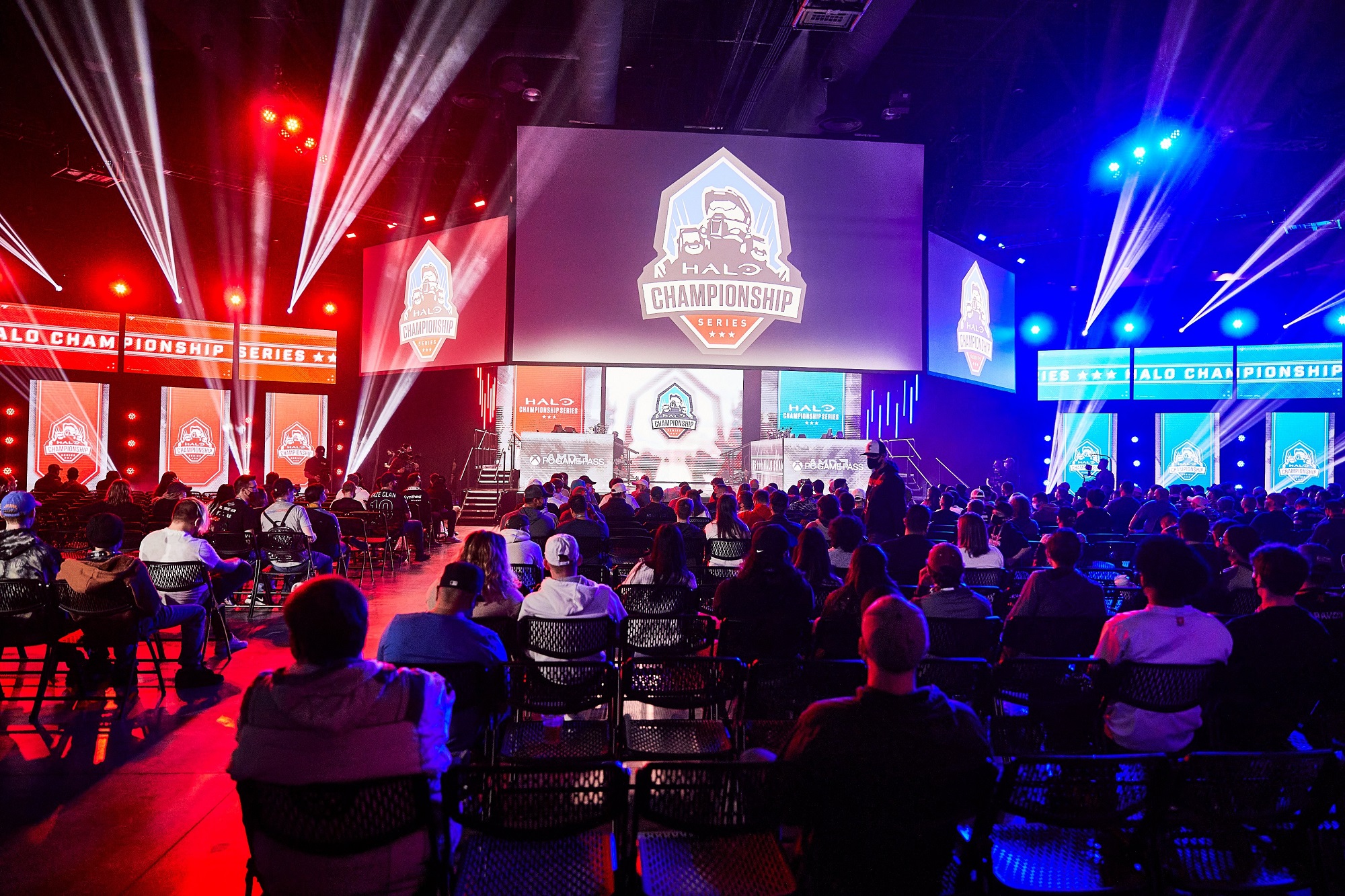
Halo is the only esport analysed here which saw a drop in prize pools between 2022 and 2023. They also hosted only 22 tournaments in the first half of 2023, although still two more tournaments than Call of Duty hosted, this followed a total of 46 tournaments hosted for Halo in 2022.
In conclusion, Call of Duty has grown exponentially since last year. The esport has started to tap into the true potential of its huge casual audience and it has quickly become one of the biggest esports disciplines in the Shooters genre. Overwatch is showing solid growth, and the changes to the league’s broadcasting coming into 2022 are having a positive effect on the league’s growth. Although unable to keep up with Call of Duty, they may be able to become comparable again through consistent growth each year. Finally, Halo’s hype wave with the return of the HCS has started to lose its magic, and the event series is struggling to continue to draw in the viewership it initially experienced.

Detailed Esports data at your fingertips.
Subscribe to & start exploring!
Mentioned events


For complete tournament statistics, visit the dedicated event pages on Esports Charts


