

What is community casting and how does it affect esports viewership?
Usually, organizers themselves cover live events, for example, esports, gaming exhibitions, or various presentations: they rent studios, hire a broadcasting team and other professionals engaged in video production. However, such events are also often covered by independent influencers, thus significantly increasing events' audience reach. In a new Esports Charts article, we'll tell you what community casting is, what types it has, and how it can affect viewership statistics.
What is community casting and what types of community casting exist?
The name speaks for itself: community casting is a broadcast of an event, which is run not by the organizers, but by independent streamers. Community casting can have many different conditions. For example, some organizers pay influencers to cover and make live commentary on an event. If it is a high-profile event and influencers themselves are interested in providing their audience with its coverage, organizers may impose different conditions (for example, streaming with a delay from the official streaming, or a restriction on commercials).
"Battle royale" example — when tournament participants themselves act as community casters
Here are a few examples of what community casting can be like. In the case of tournaments, where many players participate at the same time, the organizers often allow e-athletes to stream the matches themselves. A perfect example of this is Twitch Rivals, a series of championships for streamers. These competitions are often held in various casual games like Fall Guys or Minecraft, and in addition to the official streams, they are also covered by the participating streamers themselves, meaning that the number of channels broadcasting the event can be more than a hundred. When participants drop out, they usually stop streaming the tournament, but some stay and follow the progress of their fellow countrymen.

Source: El Periodico
Fortnite Champion Series (FNCS) is another example of a competition that has dozens, and sometimes hundreds, of streamers broadcasting concurrently. Fortnite developers have launched an open tournament ecosystem, participants from around the world play in their regional divisions. At the same time, the events feature both unknown players and real stars of the scene, many of whom broadcast their matches on popular platforms. Other popular "battle royales" such as the Apex Legends Global Series league and the Call of Duty: Warzone streamer competitions come as similar examples.
Dota 2 example — different approaches within one discipline
Dota 2 is an interesting case of how community casting can vary within a single discipline (and sometimes within a specific tournament). The most relevant example is The International 2022, the first tournament in the series where the Group Stage was covered not by Valve, but by PGL, which resulted in the establishment of so-called "official community casters'', i.e. streamers who covered the event without the 15-minute delay that other community casters were obligated to provide. Nix and TpaBoMaH were allowed to comment on the matches at the same time as the studios, while another popular Russian-language streamer NS was obliged to have a pause before covering them.
All the above-mentioned cases show that organizers and community casters interact with each other in one way or another, agreeing on the conditions under which the content creators can cover events, etc. However, community casting can appear in other ways as well. For example, almost all major online presentations are followed by popular streamers on their channels: no one missed the opportunity to watch with their viewers game presentations of such corporations as Sony, Microsoft, Electronic Arts, etc. Some organizers forbid independent streamers to cover their showcases, but there are opposite examples when influencers don't have to negotiate with companies. Content creators simply broadcast the presentation and watch it with their audiences, thereby also increasing the audience reach of such events.

Source: Nix
There are also some events where community casting is not provided at all. For example, the majority of Blizzard Entertainment tournaments are broadcasted exclusively on YouTube, and the agreement between the companies does not allow any streaming other than the official ones (not to mention other platforms). Also, community casting in many major League of Legends tournaments is significantly limited: in particular, the European franchise LEC or the Mid-Season Invitational and Worlds. However, community casting in many leagues significantly increases the overall viewership statistics of events. It even reaches the point where unofficial broadcasts gather more viewers than streams provided by the organizers — and in the case of Dota 2, this is not always good for the discipline in terms of business (more details about that below).
How does community casting affect event statistics?
League of Legends example — how community casters increase audience reach of international tournaments without covering them
The importance of independent casters to individual tournaments (and entire disciplines) can range from extremely insignificant to critically important. For example, the organizers of the American LoL franchise league — LCS — allow a limited number of selected streamers to cover some league games, but their contribution to the overall event performance is extremely insignificant since the vast majority of viewers watch the matches on the official tournament channels on Twitch and YouTube.
On the other hand, LoL has regional European leagues where the coverage of matches by content creators associated with the teams is even welcomed (each club may declare one of its own community caster). For example, in the Spanish LVP SuperLiga, the contribution of the community casters and the official channels is almost equal. The most popular Spanish streamer Ibai ‘Ibai’ Llanos owns the KOI line-up and almost always streams his team's matches in the league, thus significantly increasing the tournament's audience reach. We can find a similar example in the French LFL, where the matches of Karmine Corp club are covered by Kamel Kamet0 Kebir, the owner of the team and one of the top Influencers of France. These streamers often bring both tournaments ahead by viewership compared to many other regional LoL events, such as the qualifiers for the international Mid-Season Invitationals and Worlds tournaments.
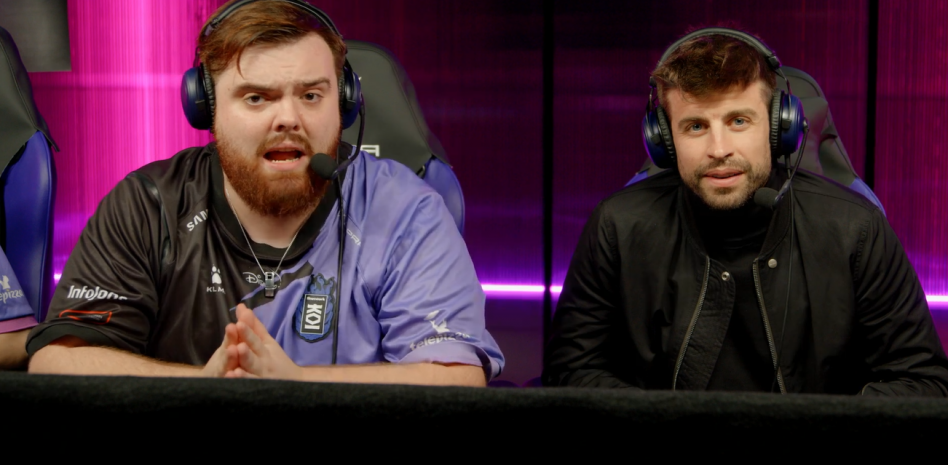
Ibai is arguably the biggest gaming influencer in Spain. Source: Mundo Deportivo
The way Riot Games approaches the community casting of its League of Legends tournaments is remarkable. Streamers like Kamet0 and ibai broadcast their teams' matches to tens and hundreds of thousands of viewers during regular seasons, who then come to watch the matches of the same teams in international tournaments like European Masters.... which had no community casting at all up to Worlds 2022. In the past, Riot Games did not involve independent influencers in the coverage of their international competitions, but these tournaments still attracted an additional fan base, who initially got acquainted with LoL esports on the broadcasts of their favorite streamers. Now, amid the viewership success of Worlds 2022, Riot Games is likely to invite star streamers to its major tournaments on a regular basis, which means that the coverage will be even more impressive.
How does Dota 2's community casting work?
In contrast to League of Legends, the Dota 2 competitive scene is much more dependent on community casting, especially the Russian-speaking segment of the discipline. As you know, the main languages of Dota 2 are English and Russian (as well as Chinese in the case of home streaming platforms): the contribution of independent streamers in the English segment to the viewership of major tournaments is hardly significant, while by 2022 more than half of the Russian-speaking audience began to prefer the streams of independent casters rather than the official studios.
Over the past four majors, the percentage of Russian-language community casts has increased from 19% to 74%. Viewers tend to prefer watching less formal streams, where Influencers sometimes do not hesitate to speak out, often inviting interesting co-casters (for example, former and current e-athletes) and thereby make their audience feel comfortable. Perhaps the best example of this is Alexander ‘Nix’ Levin, whose channel ranked second in popularity among all those covered The International 2022 in Singapore. He greatly outpaced not only the other community casters, but also the official Russian-language streams of the tournament.

On the one hand, community casting significantly increases the overall coverage of Dota 2 tournaments, but it has a considerable drawback, because of which the organizers, sponsors and studios of tournament coverage lose a lot of money. Independent streamers use official broadcasts while providing commentary (they use an in-game tool for watching matches — DotaTV), which means that sponsors do not get sufficient media value.
Valorant example — rational approach to community casting
Dota 2 esports viewership statistics are heavily dependent on Russian-speaking community casting, but there are some disciplines where independent community casters from a variety of countries and language groups have a commensurate impact. A prime example of this is the shooter game Valorant. Moreover, community casting in this discipline is structured differently than in Dota, and complements the official broadcasts rather than contrasts them.
Compared to Dota 2, the developers of Valorant themselves choose community casters to cover their tournaments, and they are obliged to cover the matches using the feed of the main streams. In short, all of the advertising appears in the same way on the streams of independent influencers. Simply speaking, the tournament viewers see the same picture in any case, only they have an opportunity to choose their caster — the official commentators or their favorite streamer.
At the major Valorant tournaments, half of the total Hours Watched (+/- a few percent) is usually provided by the community casters, and that's not surprising. A few years ago, many of the top American e-athletes, who are also popular streamers, left CS:GO and started playing Valorant. In particular, tarik, who is now the most popular community caster in the discipline, who attracts tens (and sometimes hundreds) of thousands of viewers, benefited greatly from the discipline's changes.

Source: tarik
The English-speaking creators from the U.S. and Canada are not the only ones. Streamers from Japan (fps_shaka, jasper7se), Brazil (coreano, mch_agg) and several other countries and regions, including Latin America and Spain, Turkey, Korea, etc., also attract a huge number of fans.
The World Championship in the discipline, Valorant Champions 2022, is one of the most popular esports tournaments of the year. More than 50% of the event's total Hours Watched were amassed by independent creators, which is incredibly high for a tier-1 discipline.
PUBG Mobile example — how to achieve maximum coverage via competitor games' influencers
Publishers of PUBG Mobile have a very pragmatic approach to community casting. As we know, the esports scene of this game has dozens of tournaments in different parts of the world, and events are broadcasted not only by professional studios, but also by independent streamers with whom the organizers sign an agreement. But the most interesting thing is that the competitions are often covered by the PUBG Mobile Influencers, as well as of other games, and often even by competitors' games influencers.
One of the game's major esports series is PUBG Mobile Pro League. Many of its tournaments were covered by popular influencers on different platforms, which are usually not very popular with fans of mobile gaming. For example, JuansGuarnizo, Arigameplays, ElMune__ and ElMariana ran streams for the Spanish-speaking Twitch audience, while Brazilian fans watched broadcasts of the Counter-Strike scene legend Gabriel ‘FalleN’ Toledo. And there are a lot of examples of this kind that come to mind.
However, it's not just about popular creators. One of the main competitors of PUBG Mobile is another mobile "Battle Royale" Free Fire. And Bruno ‘NOBRU’ Goes, one of the main promoters of this game in Brazil, has co-cast PMPL events several times. Another example is the streamer and e-athlete Gabriel ‘BAK’ Lessa, a former LOUD player and current CEO and player of the Crias team that plays the Free Fire emulator on PC. In short, the developers of PUBG Mobile are effectively and non-trivially expanding the fan base of their esports scene.
Why do tournament organizers and emerging esports disciplines need community casting?
Community casting is a great way to attract new viewers to an event, and these viewers could potentially become the core audience of a new discipline. Any game publishers intending to enter esports will benefit greatly if popular influencers get involved in the coverage of their events. They already have their own established audience, a significant part of which will watch their favorite creator regardless of what content he or she broadcasts, while organizing broadcasts on their own can be not only more expensive, but also inefficient — still, in the beginning it is much more important to be concerned not so much about professional production, as to reach as many people as possible.
In particular, co-casting helped Halo quite a lot during the relaunch of its HCS esports series. The first major tournament after Halo Infinite, HCS Kickoff Major Raleigh 2021, was covered by Twitch's most popular content creators, including cloakzy, scump, summit1g and others. They contributed significantly to the event's viewership, and it has become the most popular event in the history of the game.
Similarly, content creators have helped greatly in increasing the reach of various gaming events. A recent example is the NFL Tuesday Night Gaming series, which draws a small number of viewers on the official channels of the event, but the creators on their personal channels attract thousands of people.
Author: Alexey Borisov

Detailed Esports data at your fingertips.
Subscribe to & start exploring!
Mentioned events


For complete tournament statistics, visit the dedicated event pages on Esports Charts


